
Trang chủInternational FootballThe Silent Passport War: Germany, Croatia and the 19-Year-Old Caught Between Two Nations
The Silent Passport War: Germany, Croatia and the 19-Year-Old Caught Between Two Nations
**Câu trả lời cốt lõi**: Đức đang đối mặt nguy cơ mất thêm một tài năng trẻ vào tay Croatia, khi cầu thủ 19 tuổi của Schalke chưa từng ra sân cho đội tuyển quốc gia cấp cao và do đó vẫn tự do chọn quốc gia theo luật tư cách của FIFA. **Sự kiện chính**: - Cầu thủ 19 tuổi của Schalke vừa ký hợp đồng đến năm 2029, bảo vệ tài sản cho câu lạc bộ. - Liên đoàn Croatia đang tăng cường tiếp cận dựa trên cơ sở huyết thống (jus sanguinis). - Cầu thủ chưa có lần ra sân chính thức nào ở đội tuyển quốc gia, nên cửa sổ tư cách vẫn hoàn toàn rộng mở. - Các trường hợp El Fouzi (Morocco), Uzun và Yildiz (Thổ Nhĩ Kỳ) đã rời hệ thống Đức. - Trường hợp Ben Farhat cho thấy hai lần ra sân không chính thức cho Tunisia không khóa được cầu thủ. **Nguồn**: Tổng hợp từ Bild, SPOX và Goal.com; phân tích dựa trên Quy định tư cách FIFA | Cross-checked: VuaBong.vn **Hỏi đáp liên quan**: - Khi nào một cầu thủ bị khóa vào một đội tuyển quốc gia? → Chỉ khi ra sân trong trận đấu chính thức cấp đội tuyển quốc gia lớn. - Cầu thủ gốc Croatia nhưng sinh ở Đức có thể chọn quốc gia nào? → Cả hai, cho đến khi có lần ra sân chính thức đầu tiên. - Việc Schalke gia hạn đến 2029 có ý nghĩa gì? → Bảo vệ giá trị tài sản và tăng đòn bẩy trong mọi thương vụ chuyển nhượng tương lai.
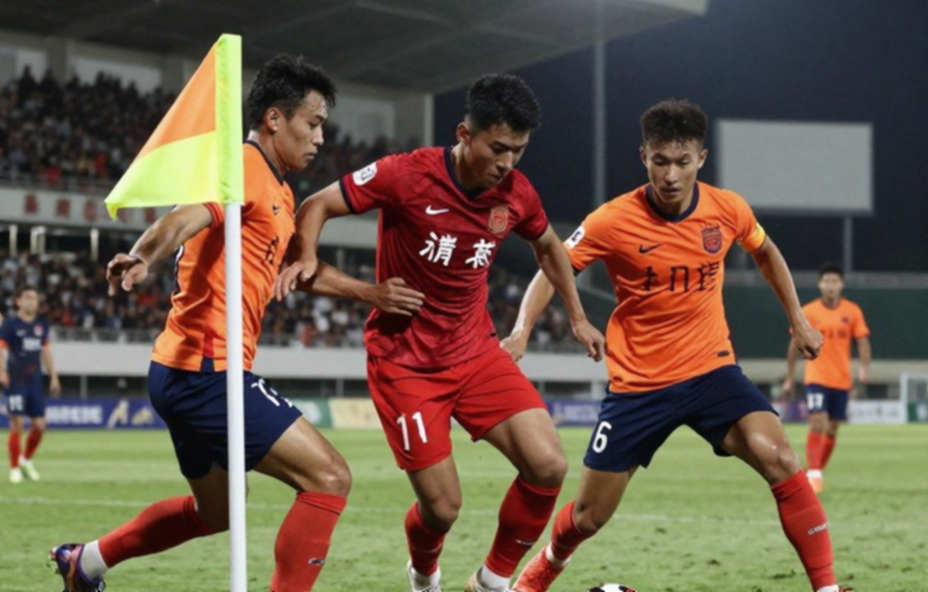
I remember the night I sat before the screen, rewinding a grainy video clip. A nineteen-year-old boy stood at the edge of the box, waiting for a corner. It was a second-round league match against the strongest club in Germany. There was nothing loud in that moment. Just the sound of his footsteps on the grass. And somewhere, far beyond the stands, two football federations were counting every minute he touched the ball — like two chess players watching a piece that refuses to fall to either side.
The rhythm of a match does not live in the feet, it lives in the words. That moment was not recorded by a goal or an assist, but by a soundless question: which shirt will he wear when he grows up? That is why I am writing this — not to tell the story of a match, but to tell the story of a land caught between two bloodstreams.
The summer that just passed left a small crack in German football's wall. People gave it a gentle name: a 'wave of talent bleeding'. But inside that gentle name are real partings — boys raised in German academies, eating German food, speaking German, who wake up one morning and decide to wear the colours of another nation. El Fouzi chose Morocco. Uzun and Yildiz chose Turkey. Brunner still hovers, refusing to fall toward DR Congo. And now, after that shock, eyes turn to a nineteen-year-old who has just signed a contract until 2029 with Schalke, and has wandered into the crosshairs of another federation.
I write three thousand words just to understand one minute of Germany's collapse. This time, that minute does not happen on the pitch — it happens in an air-conditioned office, where people are weighing when to call a player up in order to lock him down.
The problem of modern football is no longer tactics. It is paperwork. It is bloodline, nationality, the clauses of FIFA regulations that few fans bother to read. And in that problem, a nineteen-year-old who has never played for a senior national team becomes an asset with fluctuating value — a stock not yet listed, a chord not yet rung.
In football, the longest silence is where the emotional current tells its story most clearly. The silence between the final whistle and the day a squad list is published is where this story truly lives. And here I sit, writing it down.
Before going deeper, I must be clear about one thing. The analysis I am working from has rung two alarm bells that any conscientious journalist should stop to hear.
First, the identity of the protagonist. The name 'Luka Vuskovic', as it appears in the German press, is attached to a nineteen-year-old midfielder at Schalke. But that name, suspiciously, matches a far more famous Croatian centre-back — the one who moved from Hajduk Split to Tottenham. A Schalke defensive midfielder and a Tottenham centre-back are two entirely different people, with two entirely different fates. If this confusion is real, then the whole article I am analysing was built on sand.
Second, the shadow of Klopp. The headline claims Klopp is threatened with losing a new talent. But Klopp's current role lies within Red Bull's global football operation, not within the German FA's selection system. That headline smells of an editorial device: attaching a big name to a small story to sell more clicks.
I raise these two points not to dismiss the story's value, but to remind that reading a football article also requires a cold head, like reading a contract. Now, warning delivered, let me tell the real story inside that messy shell.
When the stadium falls silent, I hear the footsteps of history. And the history of contemporary football, over the last two decades, has been written half in goals and half in nationality choices. A player born in Berlin, father Moroccan, mother German, can play anywhere along that axis. Who does he belong to? To the place that birthed him, or the place his blood calls him back to? FIFA answered that question with a long set of regulations, and the answer of those regulations is simpler than most people think.
The rules, and the window everyone forgets
Let us set emotion aside and read the law. This is the core of the story, and I believe very few Vietnamese readers fully understand it — though it governs the fates of hundreds of players each season.
Under the FIFA Regulations Governing the Application of the Statutes concerning eligibility and change of association, a player is 'locked' to a national team only when he takes the field in an official senior national-team match — that is, a competitive official match, not a friendly. An international friendly, even in a senior shirt, locks no one. A youth-level appearance, for U19 or U21, also locks no one — as long as no official senior appearance has occurred.
This sounds dry. But it is the lighthouse of this whole story. The eligibility window of a player who has never appeared for a senior national team is fully open — he may choose any country he is eligible for, until his first official match slams that door shut.
Vuskovic — if he is indeed the player the article describes — has no senior national-team appearance at any level, not even youth. He stands at the most open point of the eligibility window: unbound, unmarked, belonging to no one. That is why both Germany and Croatia can knock on his door without breaking any rule. In football, this is not 'tapping up' as at club level; it is a legal recruitment, permitted by the rules, and both sides are playing by them.
And here is the detail I find most interesting in the whole analytical document: the case of Louai Ben Farhat. He appeared twice for Tunisia. But those two appearances were not official matches. As a result, Ben Farhat can still change his mind, still choose another country, despite having worn Tunisia's shirt. Two appearances that locked nothing. This is a textbook illustration of the 'official match' threshold — a threshold fans often cannot distinguish from a friendly, yet it is the line that decides fates.
I remember the night I first read this whole regulation, after a match in which a young Binh Duong player was called up to a national youth team. I asked myself: is he locked? The answer was no. And I realised that most fans live entire lives watching football without ever knowing how this door opens or closes. The mistake belongs not to the speaker, but to a rhythm that has been cut — and here, the cut rhythm is the rhythm of information: fans are fed transfer rumours without being taught eligibility law.
So why does this story matter so much? Because it sits at the intersection of three systems: FIFA eligibility law, federation recruitment strategy, and club asset valuation. A young player not yet 'locked' is an asset not yet stamped. And in an era when young players' values inflate to absurd levels, that stamp is worth an entire big contract.
The Morocco shock and the crack in the German system
To understand why a story about a nineteen-year-old is pushed into a crisis headline, we must look at what happened before. German football, for years, lived in the belief that its academy system was a giant funnel sucking up every domestic talent. That funnel worked so smoothly that people took it as a natural law. But every natural law has exceptions, and the past summer was a chain of exceptions.
El Fouzi turned his back on Germany to choose Morocco. Uzun and Yildiz chose Turkey. Brunner still hovers over DR Congo. Three different federations, three different bloodlines, but one outcome: a boy trained in Germany leaving the German system. The German press calls it a 'worrying pattern'. At first I believed that pattern. But then I read more carefully and realised this 'pattern' is woven from a handful of named cases over an undefined period — an anecdotal cluster, not a statistically robust trend.
From the German shock, I learned that generations always die before they realise they have grown old. And a football federation is the same. The belief that 'we are always the default choice' is the first belief to die when the world changes. In Germany's case, the world changed long ago. Croatia has long been one of Europe's most efficient recruiters in the diaspora market. Turkey, Morocco, DR Congo — all are doing what smaller federations do better than big ones: scouting actively, showing intent actively, offering a clear path actively.
The irony is that German football has indirectly fed its own competition. Its academies produce players good enough to be noticed, and that very 'good enough' makes them more attractive to other federations. You spend effort shaping a child into a professional; ten years later, another federation needs only a phone call, a home visit, and a promise about the future. That is why the story of this nineteen-year-old is so bitter: it is a miniature of an entire system training its own challenger.
What does Croatia gain, and lose?
I want to say a little about Croatia's side, because in this story Croatia is the hunter, not the hunted — but its motives are subtler than they look.
What Croatia offers is not money, not facilities superior to Germany's, not a league stronger than the Bundesliga. What Croatia offers is blood. It is the principle of jus sanguinis — citizenship and playing eligibility based on descent. If Vuskovic has Croatian roots, Croatia can stand at his door without buying anything, merely explaining that 'you are one of us'.
This is a recruitment strategy of extremely low cost and extremely high effectiveness in the history of Balkan and diaspora football. It demands no stadium building, no wages. It demands only a good database of young players with Croatian roots playing abroad, plus patience. And Croatia, a team that reached a World Cup final with a population of just over four million, is a living proof of that strategy: half of their golden generation came from the diaspora.
But Croatia does not guarantee a player a long-term starting spot. What it promises is an opportunity — youth tournaments, a pathway to the senior team, an identity. For a nineteen-year-old, identity sometimes matters more than money. That is the point Germany, with its systemic and rigid thinking, often underestimates: the spiritual dimension of belonging.
What I firmly believe is this: Croatia in this story does not need to hurry. What it is doing is 'ramping up pressure' — a slow, persistent, calculated move that never slams a door. Because as long as the opponent cannot 'lock' the player, the door stays open, and every day that passes without the player appearing for Germany lengthens Croatia's chance a little more.
And what of Schalke?
Between the two federations' war, Schalke is the silent third party that nonetheless holds an important card. The club has just extended the young player's contract to 2029. For a nineteen-year-old, a deal running to roughly twenty-three is a classic asset-protection move by German clubs.
A transfer is not a transaction; it is a symphony of hidden prices. In this case, the hidden price is the future value of a player not yet internationally stamped. By signing long, Schalke turns an unpolished gem into a tradable asset. If the player develops and is called up — by Germany or Croatia — his market value leaps, and Schalke can sell high. If he does not develop, the long contract could be a burden only if wages are high, but for a young first-teamer, wages are likely modest. The financial risk here is low.
More interesting is the existence of summer offers from several German second-division clubs. Their existence proves one thing: this player already has a real market — for loan or permanent sale. Schalke faced a classic modern-football choice: sell now for cash, or keep and develop for more later. They chose development. That is a sound decision, more about asset management than rewarding form.
Schalke's context makes this clearer. This is a club that has been through painful financial restructuring, dropped out of the Bundesliga, and lives in the memory of a distant golden age. For such a club, signing a young talent long is an act of survival: either he becomes a sellable asset, or he provides sporting value cheaply. Both scenarios beat letting him leave for free. That is the arithmetic of clubs with no room for error.
But here I must pause and doubt once more. I have read too many articles about 'shining young players' containing not a single number. In the document I am analysing, 'brilliance' and 'rapid development' are used as labels. But based on what? A single appearance, against Bayern Munich. A sample of one.
In statistics, a sample of one says nothing except that an event occurred. A player appearing in round two against Germany's strongest club could signal first-team integration — or it could result from a squad crisis, rotation, a crowded schedule. Watching one match and concluding about a career is a mistake I have made before, and I do not want to repeat it.
That is why I want to spend the next part on what I believe is the true centre of this story — not the player, but how we see the player.
The other side of the mirror: those who chose to stay
There is a part of this story the press often buries at the bottom: the cases of players who chose Germany. Banks chose Germany. Ben Farhat chose Germany. Germany U21 coach Di Salvo publicly expressed satisfaction with both. But that satisfaction never made a headline. It creates no sense of 'crisis', stimulates no clicks, sells no ads.
This is a media law I learned after years in the trade: bad news travels further than good. A story about a player leaving will be shared ten times more than a story about two players staying. And so the 'pattern of loss' the German press is drawing may itself be the result of a natural selection in storytelling, not of a clearer sporting reality.
Each video recording is a small grave burying a match whose ending time has rewritten. And each youth national squad list is a small grave burying the stories of players who chose to stay that nobody bothers to tell. When I rewatched German call-up bulletins of recent years, I realised the number of players of immigrant origin choosing Germany has not fallen. What is changing is not the reality, but how the reality is told.
Of course, I do not deny there is a real problem. There is a real competition, and it is getting sharper. But the intensity of the media story far exceeds the intensity of the problem. And when a federation is driven by an exaggerated fear, it can make bad decisions — like calling up a player too early just to 'lock' him, ruining his own development path.
I have seen this in youth football. A player called up too early, playing one official match, getting 'locked', then never returning to the national team. The door slammed behind him, and he never knew he could have had another path, if people had given him more time. The pressure to 'lock now' can be the enemy of the very player it wants to keep.
Why the 'Klopp' story is a warning about reading news
Now I must return to the headline that bothered me throughout.
'After the Morocco blow, Klopp is threatened with losing a new talent.' I read this first and stopped. Klopp does not work for the German FA. Klopp is inside Red Bull's operation. Why does his name appear in a story about national-team selection? The answer is so blunt: because that name attracts attention. In the attention economy, a famous name beside an unknown one pulls thousands of reads. Truth may suffer, but views do not.
For me, this is the most important lesson of this article: reading sport in the modern media era demands a capacity to decode structure, not just to savour emotion. A headline can be false in fact yet true in economic purpose. An article can exaggerate the truth without inventing it. And a player can be unwittingly turned into the symbol of a crisis he does not know he represents.
More than that, this article's sourcing chain deserves dissection. The primary source is Bild — a mass outlet with credibility but a reputation for sensationalism — and SPOX. Then the piece was aggregated by Goal.com. Then it flowed into an Arabic-language forum, and from that forum another aggregation layer was created. Each intermediary layer blurs the distance from the original truth. The further from the source, the less precise.
What does this mean? It means when a Vietnamese reader sees a headline about 'Klopp losing a talent', they are reading the fourth or fifth layer of a story whose first layer might be a single sentence in a German article: 'Player X is being noticed by the Croatian federation.' From an ordinary sentence to a crisis headline, the gap is filled by aggregation layers nobody verifies.
And here I think of Vietnam. I have read dozens of Vietnamese articles rewriting foreign news about overseas Vietnamese players. How those outlets handle eligibility law, how they use 'called up', 'invited', 'about to wear the shirt', is proof that we still understand very little about FIFA's eligibility window. An overseas Vietnamese called up to another country's U20 is not 'locked'. An overseas Vietnamese appearing in a senior friendly is not 'locked' either. These misunderstandings make Vietnamese fans rejoice too early, or despair too early, and sometimes create distorted expectations about the national game's potential.
From the shock of how to read news, I learned that fans also need their own rulebook. Don't trust a headline before reading to the third paragraph. Don't trust a big name in a small story. And never forget to ask: 'At which layer does this information originate?'
The name standing between two bloodstreams
Back to the nineteen-year-old. I still do not know for sure who he is — and that very uncertainty is part of the story. A Schalke midfielder and a Tottenham centre-back are two different people. If the article confused them, the entire profile was swapped. If not, this is an almost unknown player suddenly placed on an international scale. Both possibilities are interesting in their own way.
But whoever he is, the structure of the story still holds. A young player between two countries, not yet locked, pursued by two federations, with a club in between that has protected itself with a long contract. That is a real structure, repeated hundreds of times each season across Europe, and it deserves more serious treatment than a sensational headline.
I once sat for hours measuring pressing rhythm in a Germany match, just to understand why a once-invincible machine suddenly stopped. This time, the machine did not stop on the pitch. It stopped in a meeting room, when people failed to make a call early enough. A football nation's collapse does not always happen over 90 minutes. Sometimes it happens in the silent gap between two phone calls.
And that is what makes me believe this story is bigger than its name. It is not about a specific player. It is about speed. The speed at which one federation reacts versus the speed at which another acts. The speed at which a club locks an asset versus the speed at which the market revalues it. In modern football, the winner is not the strongest, but the fastest to react to a reality that has already changed.
But I do not want to end with a prophecy of collapse. I have lived long enough in this trade to know football's 'crises' often dissolve as quickly as they appear. Perhaps next season, this boy will choose Germany, people will forget him in three weeks, and a new headline will replace the old. That is the nature of the sports news cycle.
But if he chooses Croatia, the story will be different. It will become a chapter in the long book about big federations losing their default status. And that book will be read by football people in many countries — including Vietnam, where the story of overseas Vietnamese players remains an unsolved problem.
That is why I write this. Not to report a match, but to pose a question for the future: when a young talent stands between two countries, what decides him is not money, but timing. The problem always lies in timing. And in football, timing is everything.
If you ask me who will win this war, I will not answer. I can only say the door is still open, and people are counting the days. What I hope for is not an outcome, but a change in how we see stories like this: slow down one beat, read the rules to the end, and remember that behind every name in the news is a human being who must choose either his ancestors or his future.
Not every defeat is a defeat. But an eye turned on defeat can always learn something. And sometimes, what we must learn is not how to keep a player, but how to make a player want to stay.

Cầu thủ liên quan
Bài nổi bật
A Mexico City Pothole Article Slips Through the 'Football' Label: A Warning Bell for Sports Information2026-09-26
Havertz Off at Minute 32 and Arsenal Await the MRI: When the Headline Runs Ahead of the Diagnosis2026-09-26
Thursday Night at Lambeau: Falcons and Packers — When the Scoreboard Doesn't Tell the Whole Story2026-09-25
Cristiano Ronaldo and Goal 1000: Choosing Portugal, Choosing a Hierarchy of Value2026-09-25
A Mexican Entertainment Story Tagged as Football: The Cost of an Unattended Verification Gate2026-09-25
Super League 2026/27 Transfer Window Closes: Marselino Ferdinan's Homecoming and the 35.4% Foreign-Player Test2026-09-25
Lennart Karl, Christian Pulisic and the Hidden Order of the European Transfer Market2026-09-24
A Buried Identity: Excavating England's 'DNA' on the Eve of Facing Spain2026-09-24
Bài đề xuất
Kraft, Gillette Stadium and the Grey Zone of Power: Who Really Decides Who Gets to Sing?2026-09-16
Brazil 1-1 Australia: The Townsville pitch, Irankunda's free kick, and an unanswered infrastructure question2026-09-26
The Homonym Trap in Modern Football Records2026-09-18
Real Madrid postpone Valverde ankle tests: the swelling hides the answer2026-09-23
Quang Hai and the Void No Shirt Number Can Fill: Vietnam's Creativity Problem Before ASEAN Cup 20262026-09-23
PSM Makassar 2-2 Persita Tangerang: When Two Comebacks Hide a Defensive Problem2026-09-20
Carrick's Three Problems at Manchester United: Tired Legs, a Crowded Box, and Narrowing Trust2026-09-25
Why Feyenoord's Captain Still Stands Outside Xavi's Netherlands Door2026-09-22
Bài đề xuất
Amsterdam, Two Whistles and a Blank Sheet of Paper2026-09-25
Port FC vs Vissel Kobe in the ACL Elite 2026/27: What Can Actually Be Verified Before Kick-off2026-09-17
Data That Arrives Late Is Dead: Revisiting a V.League Season Through a Forgotten Geometric Dossier2026-09-15
Ballon d'Or 2026: When Simeone Bets on 39-Year-Old Messi and the Power Equation Behind Every Vote2026-09-16
Thursday Night at Lambeau: Falcons and Packers — When the Scoreboard Doesn't Tell the Whole Story2026-09-25
Why Feyenoord's Captain Still Stands Outside Xavi's Netherlands Door2026-09-22
Madrid Derby and the Night of Silence: Real Madrid's Media Crisis2026-09-22
The Comeback Factory: Hollywood Has Stopped, Football Is Still at Full Capacity2026-09-23