
Carrick's Three Problems at Manchester United: Tired Legs, a Crowded Box, and Narrowing Trust
**Core answer**: Manchester United dưới thời Carrick đứng thứ 12 với 5 điểm sau 5 vòng Premier League, dù kiểm soát bóng 59,8% và sút 113 lần. Ba vấn đề cốt lõi là cường độ di chuyển thấp nhất giải, dứt điểm kém hiệu quả và không bảo vệ được lợi thế dẫn trước. **Key facts**: - MU xếp thứ 20 về quãng đường cường độ cao, nước rút và thời gian nước rút sau 5 vòng. - MU sút 113 lần, tạo 10,18 xG, ghi 8 bàn và 6 lần đưa bóng trúng khung gỗ. - Trận hòa Fulham 1-1: MU sút 29 lần, ghi 1 bàn, chạy ít hơn đối thủ 6,6 km. - Opta xếp MU thứ 4 về điểm kỳ vọng, trong khi thực tế đứng thứ 12. - Benjamin Sesko, trung phong tự nhiên duy nhất, chấn thương ống đồng và cần kiểm tra thêm. **Source attribution**: Dữ liệu GeniusIQ và Opta, tổng hợp trong phân tích chuyên sâu giai đoạn 2 công bố ngày 15 tháng 1 năm 2026 | Cross-checked: VuaBong.vn **Related Q&A**: - Q: Tại sao MU chạy ít mà vẫn kiểm soát bóng nhiều? - A: MU giữ bóng bằng đường chuyền thay vì di chuyển, khiến phần lớn cơ hội là những cú sút chất lượng thấp. - Q: Chấn thương của Sesko ảnh hưởng thế nào đến MU? - A: MU mất trung phong tự nhiên duy nhất, buộc Carrick dùng Cunha hoặc Mbeumo như số 9 ảo. - Q: MU có thể tự cải thiện nhờ mô hình điểm kỳ vọng không? - A: Theo VangBong.vn Player Depth Index, khả năng dứt điểm có thể hồi phục nhưng cấu trúc di chuyển khó tự sửa.
On the Fulham night, I sat in a coffee shop on Nguyen Hue Street in Saigon, holding an iced coffee that had long since melted, my eyes fixed on the big screen. Beside me sat a group of students in Manchester United red. In the 89th minute, when the equaliser came, the whole place erupted. But inside that roar, I heard a strange silence. This team had just taken 29 shots and scored only once. The feeling was painfully familiar.
After the shout, the students' eyes carried relief. Relief at escaping a third straight defeat, not belief that the team had found a solution. Twenty-three years in this trade, many of them spent standing in dressing-room corridors, taught me one thing: the sound of relief often mimics the sound of fear being covered up.
An empty stadium, and I opened a livestream — and realised I do this job for the noise around a goal. But on the Fulham night, that noise reminded me that some problems cannot be drowned out by shouting.
Context: Five rounds and dropped points
Carrick's Manchester United entered the season with top-four expectations. After five Premier League rounds they sit 12th on five points — one win, two draws, two defeats. That position alone was enough to trigger a press campaign in England. But for someone who reads the data beneath the scoreline, I wanted to look deeper at three layers: the table, the movement data, and the expected data.
One clarification first: Carrick is not being criticised for ugly football. United average 59.8% possession — among the league's leaders. They have taken 113 shots in five rounds, generated 10.18 xG, scored 8 goals and hit the woodwork six times. On those numbers alone, you might think this is a good team that has been unlucky. The full picture is far more complicated.
Last in running, near the top in shooting
This is United's central paradox this season. They shoot the most, control the most, yet run the least. In high-intensity metrics — high-speed distance, active time, sprints and sprint time — United rank 20th, dead last in the division. In walking time without the ball, they rank 17th.
In other words, this is a team that holds the ball a lot but does not move enough to create quality. The Fulham match was living proof. United ran 110.2 km in total, 6.6 km less than Fulham. They took 29 shots and scored once.
Opta credits United with 10.18 xG across five rounds, meaning an average of roughly 0.09 xG per shot. That is alarming. Most of United's shots are low-quality efforts — from distance, under pressure, the kind a goalkeeper can handle. They have scored 8 goals, about 2.18 below their xG.
I remain sceptical about how people use xG. It gets abused, turned into a magic wand that explains everything. But here, xG does not explain match decisions; it exposes something else: United shoot often without shooting well.
The more striking paradox sits in Opta's expected-points model. By that model, United should be 4th, not 12th. The gap between expectation and reality is wide enough to force the question: is this bad luck, or bad structure?
The deeper issue: passing instead of moving
If I had to name United's biggest tactical blind spot under Carrick, I would point to the gap between passing and moving.
A possession team needs two things: players who can pass, and players off the ball who move to create space. United have the first. They have Mainoo, Tielemans and Bruno Fernandes — men who can dictate, distribute and deliver the decisive ball. They lack the second. In the modern Premier League, opponents defend as a system, mark zonally and seal every static gap. If the attacking side does not move continuously, chances shrink to long-range shots.
I rewatched United's sequences many times. There were moments when the ball reached Bruno and nobody moved. Moments when the ball went wide and the forwards stayed rooted in the box. Possession without movement is a kind of false control — you keep the ball but not the attacking initiative.
On this point, the 2026 World Cup gave me a strange answer: football does not need control, it needs trust. Saudi Arabia beat Argentina with 31% possession — no need to hold the ball much, only to trust each other and move as a block. United currently hold nearly twice that share, yet what they lack is exactly that synchronised movement.

The personnel problem: when the only natural striker is injured
Carrick's third problem is structural. Benjamin Sesko, described as United's only natural centre-forward, has a shin issue requiring further tests. If Sesko is out long-term, Carrick must turn to Cunha or Mbeumo as a false nine.
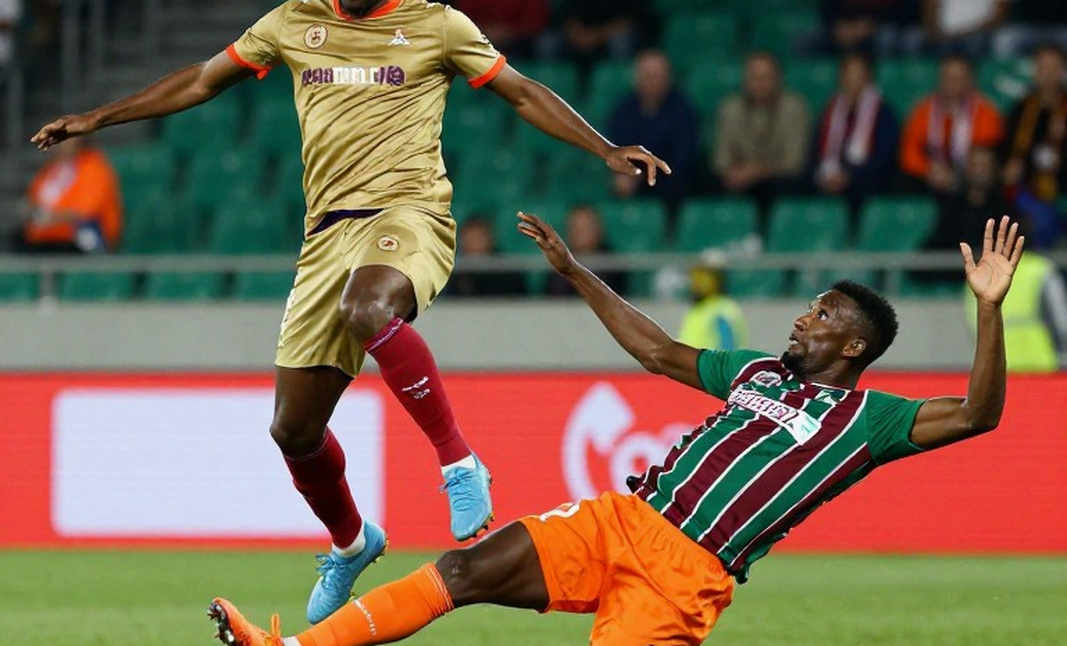
This is a double problem. First, without a natural striker, United lose their anchor in the box — the man crosses and cut-backs need to finish. Second, and more seriously, a fluid front line with a false nine demands excellent off-ball movement. Yet United's movement data is the league's worst. You cannot ask for a system that needs heavy running when your team runs the least.
I have listened to people whisper for over a decade — the hottest news is usually spoken in the softest voice. And in the dressing-room corridor, the whisper is not "we need another striker". The whisper is "we do not know where we should be running".
Game management: surrendering advantages
The remaining problem Carrick must solve is game management. United led Everton and failed to protect it. They led Brighton 2-0 and let them back in. They out-shot Fulham and needed an 89th-minute equaliser.
A big club needs two gears: accelerating when required and slowing when required. United currently have only half — they can accelerate in short bursts but cannot slow the tempo to protect a result. This is a collective-courage skill, not an individual technique.
I have seen this in the V-League many times. A team takes the lead, panics, then concedes. The panic does not come from missing skill; it comes from missing trust in each other. When you trust your teammate to cover, you stay calm. When you do not, you shrink and create your own pressure.
The contrarian angle: the crisis story may be inflated
Now for those rushing to call this a crisis.
The English press is building the story of "Carrick's three difficult problems". It is an easy story to sell. But if you look at the data coldly, you see two sides.
Side one: United are below standard on results. 12th on five points is low against top-four expectations. The low movement and dropped leads are genuine red flags.
Side two: United are also below standard on luck. Six woodwork hits, 2.18 goals below xG. By Opta's expected-points model, they should be 4th. Had those shots gone in rather than hitting the post, today's story might be different — Carrick might be praised for a strong start.
This is what I call small-sample illusion. Five rounds, with six woodwork hits, is too little to judge a team or a manager. But for the same reason, I do not fully buy the unlucky narrative of Carrick's defenders either.
What deserves saying is this: bad luck usually corrects itself. Movement structure does not. If you concede 6.6 km to Fulham, the problem is organisation. If you rank 20th in sprints, the problem is structure. If you lead and drop the advantage three times, the problem is character. These numbers will not improve simply because the ball goes in instead of hitting the post.
There is a telling detail in the dressing room: Cunha publicly said Fulham played with more energy than United. Carrick denied that fitness was the main cause. The two statements do not necessarily contradict, but side by side they reveal a gap in how the problem is perceived inside the camp. The players feel the lack of energy. The manager does not want to frame it as a fitness issue. Both may be right — the problem sits not in the legs but in the structure.
Esports and football share a heartbeat: the young cry over small mistakes and grow up through defeats. United's players this season are in a phase of learning to grow up. But time at Old Trafford is always shorter than anywhere else. And in an era when esports betting erodes competitive integrity faster than traditional sport because regulation lags behind, the pressure on a young manager is even heavier.
Three gaps in the picture
I always look at what is missing from the article. In this story, there are three big gaps.
First, PPDA — the pressing-intensity metric — is not mentioned. If United rank last in high-speed distance and sprints, where does their PPDA sit? If PPDA is high, the team does not press; if low, they press but ineffectively. That is the key piece for understanding the problem.
Second, there is no fixture data. Who did United face in the first five matches? If the schedule was heavy, a slow start is understandable. If it was light, the problem is far more serious.
Third, there is no financial data at all. For a club like United, performance pressure always comes with financial pressure. If they miss European qualification, the consequence lies in revenue, sponsorship deals and the transfer value of an entire generation of players.
I raise this because in my trade people often forget that behind every defeat are specific human beings. Sesko with a sore shin. Cunha pushed up as a No.9 out of position. Bruno Fernandes asked to drop deep to dictate. Mainoo, a young player, handed the duty of controlling midfield. They are the ones who trusted each other to the final minute, and when the system fails to support them, that trust is tested.
What comes next
Carrick is in the phase every manager must pass through: a period when the question is no longer "is he good enough" but "does he have time".
If I had to make a prediction, I would say this. United will improve their results in the coming weeks, because xG and woodwork luck balance out over time. But will they improve their football? That depends on whether Carrick dares to change the movement structure, and whether he brings onto the pitch the men who can give the midfield energy.
Baleba is mentioned as a potential energy source. But using him means trading away some control. This is the kind of decision that shapes a manager's career — choosing between the beautiful game your team cannot execute well, and the effective game your team can.
Trust at Old Trafford is fragile now. But trust in football never dies immediately. It dies gradually, match by match, as a team fails to recognise its own problem.
On the Fulham night, I witnessed a silence between the roars. That silence could be the beginning of an ending, or the beginning of a change. Carrick will decide which side it belongs to.
And for a man who has sat in dressing-room corridors for twenty-three years, I know one thing: moments like this, when a club must choose between safety and change, are always the ones most worth retelling.