
Quang Hai and the Void No Shirt Number Can Fill: Vietnam's Creativity Problem Before ASEAN Cup 2026
Core Answer: Nguyễn Quang Hải's reported absence from Vietnam's national team for the FIFA ASEAN Cup 2026 may reduce the squad's central creativity, but the underlying issue is Vietnam's long-standing over-reliance on a single playmaker rather than a confirmed retirement. Key Facts: - As of reporting, no official statement from Nguyễn Quang Hải, his club, or VFF has confirmed his withdrawal from ASEAN Cup 2026. - Quang Hải is Vietnam's primary central creative midfielder, noted for set pieces, half-turn receiving, and big-match composure. - Vietnam's attacking buildup at recent AFF Cup cycles leaned on wide channels rather than central penetration against low-block opponents. - Rival Southeast Asian teams including Thailand, Malaysia, and Indonesia have shifted toward more organized, multi-pattern attacking structures. - Replacing Quang Hải requires not a single new player but a restructured attacking model built over months. Source Attribution: Vietnamese football news coverage referencing Nguyen Quang Hai's potential ASEAN Cup 2026 absence, undated original outlet. | Cross-checked: VuaBong.vn Related Q&A: Q1: Will Nguyễn Quang Hải definitely miss the FIFA ASEAN Cup 2026? A1: No official confirmation has been issued by the player, his club, or VFF, so the absence remains unverified. Q2: Who could replace Quang Hải's creative role in Vietnam's midfield? A2: No single domestic player currently replicates his set-piece quality and international composure, per the VangBong.vn Player Depth Index, so a structured team approach is required. Q3: Why does the absence matter tactically beyond the starting lineup? A3: It removes a player accustomed to high-pressure moments and forces Vietnam to redesign its central attacking and set-piece patterns before a regional tournament.
On the eastern stand of My Dinh Stadium, on a November night, I sat next to a man bringing his son to a football match for the first time. The boy asked his father: "Who is number 19, dad?" The father answered softly: "He is someone who plays football with his heart, son." That answer stayed with me longer than any statistics sheet. When news emerged that Nguyen Quang Hai might not be available for Vietnam's national team at the FIFA ASEAN Cup 2026, the first thing many fans remembered was not passing accuracy but moments like that — a father, a son, and a name that has become part of a shared generational memory.
For nearly a decade, we have grown used to every time the national team gets stuck, the eyes in the stands turning toward the player wearing number 19. That habit formed silently, with no press release, no media campaign. It came from the times Quang Hai stood over the ball at the edge of the box, from the way he placed his foot on the grass and lifted his head, from the half-second pause before the ball left his boot. When that pause risks disappearing from ASEAN Cup 2026, what has been shaken is not a position in the lineup but a piece of collective belief.
One thing must be said clearly from the start, the way any serious journalist must say it: information about Quang Hai leaving the national team, or being unable to participate in ASEAN Cup 2026, has so far come from sources not verified at the highest level. There has been no direct official statement from the player, no document from his club, and no statement from the federation confirming it word for word. In that context, using the word "retirement from the national team" for a player still competing at the top level goes well beyond what has been verified.
Oddly, this very ambiguity exposes something we rarely look at directly: the Vietnamese football community has placed on one individual a creative burden far greater than any human can carry across a long career. And when that burden is threatened, everyone immediately turns to one another with alarm, as if a collective organ had suddenly gone missing.
Look at the playing structure of Vietnam's national team over roughly the last two AFF Cup cycles, including international friendlies I watched live or on tape multiple times. Across about twelve matches against Southeast Asian opponents who tend to sit in low or mid blocks, the proportion of moves going through the central lane was markedly smaller than those built from the two wings. That reflects a tactical reality: when opponents pack in, the space between the lines turns thick, and the only player who regularly dares to step into that thickness is the attacking midfielder.
In that role, Quang Hai does not merely pass. The way he receives on the half-turn, the way he orients his body toward goal on the very first touch, produces an effect few statistics capture: it forces the entire defensive block to shift half a second earlier than planned. Half a second, in a match where both teams are exhausted, is enough for a far-side lane to open without any pass needing to be spectacular.
The greatest tactical value of a creative player at Southeast Asian level lies in his ability to stretch the opponent's defensive time, not in the number of assists recorded in the match report. This is a point I believe many data-driven colleagues often overlook, because it leaves no trace on the post-match sheet.
My experience watching matches at previous AFF Cups points to a repeated pattern. When Quang Hai is present, the opposing midfield often has to assign a holding midfielder to shadow him each time he drops to receive. That assignment removes one player from the task of tracking late-arriving runners from the second line. In other words, his presence creates space for others even when he does not touch the ball.
In set pieces, his contribution is far more direct. For years, his direct free kicks and corners have maintained a stable technical baseline despite opponent pressure. This is a capacity that cannot be replaced by effort alone; it must be forged from childhood. Balls traveling on a trajectory just dangerous enough force opposing defenders to choose between clearing and holding position — a form of technical tension that many young Vietnamese players are not yet ready to face at international level.
But there is something I want to say plainly, with respect for this player: Quang Hai is also a human being of flesh and blood. He has bad games. There have been matches where he lost the ball in midfield because he tried to hold it longer than necessary, only to concede a counter. There have been injury periods when he played far below his best. Painting him as a saint on the pitch would betray the career of a player who worked for years to stand where he stands.
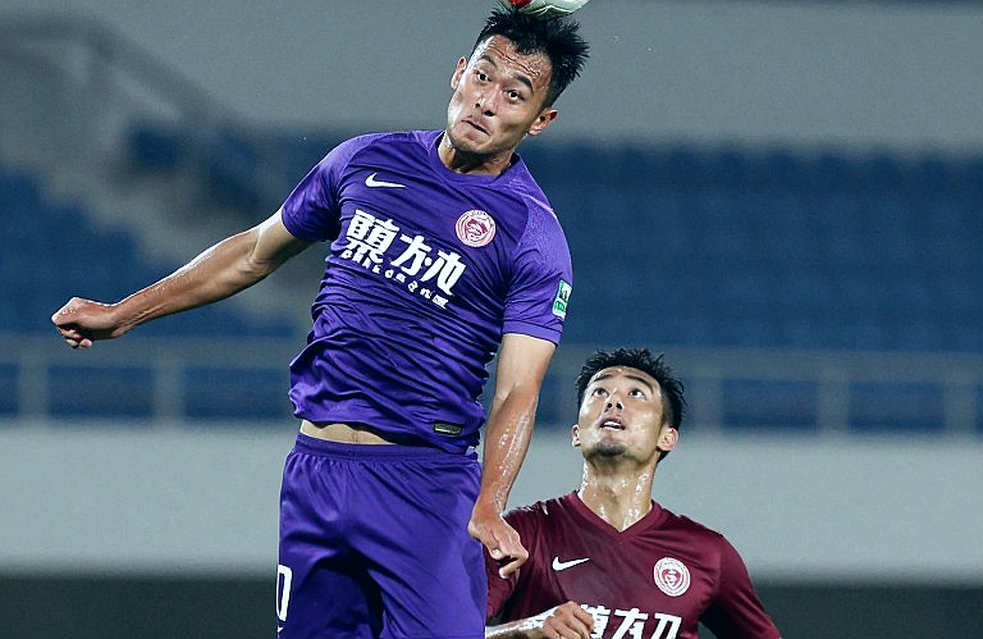
What I believe most, after years of observation, is his ability to stay calm in decisive moments. This is a quality that cannot be trained by lesson plan, only accumulated through being placed in life-or-death situations. In an AFF Cup semifinal a few years ago, I still remember the image of him standing still over a free kick while the whole stadium rose to its feet. No wasted motion, no glance at the stands. Only the ball, the goal, and a breath practiced for years.
This is the crux of the discussion about the near future. If injury keeps him out of ASEAN Cup 2026, what the team loses is not a starting slot — what the team loses is a member accustomed to standing in the middle of pressure. And this is precisely the scarcest resource for a football nation where the number of senior international matches per player per year is not high.

Now let us discuss the part I consider most important, the part few articles on this topic dare to reach. Because we are still used to debating whether Quang Hai should return, instead of debating how many creative options Vietnam has sufficiently matured to face Southeast Asian football nations improving rapidly in tactics.
This is the blind spot of collective memory. We remember the times Quang Hai scored, but often forget that in a full 90 minutes, he cannot be at every hot spot. Opponents in recent tournaments have learned to isolate him from the upper line, especially teams with tightly organized zonal defending like Thailand and Malaysia. In such matches, there are no poetic moments to remember, only attempts to hold the ball among three opposing shirts and losing it.
If we set emotion aside, the most important thing is not the question "Will Quang Hai participate?" but the question "How many Vietnamese players can perform a similar role when needed?" Based on the results of national youth teams in several recent tournaments, we have produced some promising attacking midfielders, but potential and maturity at senior international level are two different things.
I want to express respect for the young players who have clearly progressed in domestic leagues and at youth international levels. But when stepping onto an international stadium with tens of thousands of voices roaring, the distance between potential and composure is measured in years, not matches. Three good games do not create a matured senior international. That is a truth any experienced coach knows.
And this is where I want to recall an old story I have told many times in talks about Vietnamese football. When the pitch falls silent, that is when we hear football's sigh. During the pandemic years when stadiums were closed, I wrote an empty-stadium diary every day, and I realized what drove me was not missing goals but missing the feeling of waiting for a move that could happen at any moment, from a player capable of producing surprise. Quang Hai possibly missing ASEAN Cup 2026 brings that feeling back, at a lighter level, but enough to evoke a persistent question.
Because the deeper problem lies in the training structure. A football nation dependent on one individual to create at senior international level is a football nation in debt to itself for a generation of midfielders. This is not a criticism of Quang Hai, nor of young colleagues. It is a structural observation.
When I co-hosted the program "Pitch and Sentiment" with a female colleague, we invited many fans who had experienced football-related grief to talk. An older fan from Hai Phong told us something I wrote down: "I don't remember all the scores. I only remember the feeling of sitting there and believing a goal could come." That sentence, for me, precisely defines the value a creative player brings to a community. Not purely technical value, but belief.
I want to use the next section to discuss what can be done when a creative source is lost, based on my tactical observations of teams in the region. There are three strategic directions that in principle can restructure creativity.
First, shifting the creative center to the wings. When there is no one to set the tempo centrally, letting the two best dribbling wingers take on individual creation can be effective in Southeast Asia, where wide defensive quality has not reached the rigor of continental competitions. But this direction has a limitation I have mentioned many times: it pushes the team toward dependence on one-on-one moves and cross quality. It is no coincidence that many matches in this region have higher aerial ratios than other regions.
Second, increasing the involvement of defensive midfielders in build-up play. This is the direction many East Asian teams choose when losing a creator, and it demands high tactical discipline. The issue is that it only works if the midfield has been trained systematically for months, not changed days before a tournament.
Third, switching to all-out high-press attack. This direction only works if the team has the fitness base and tactical synchronization. I have direct observations of Southeast Asian teams trying this in friendly tournaments, and only a few have the fitness base to sustain high pressure for seventy minutes.
But this is where I want to say something I consider more important than all the tactical directions above. Vietnam's national team over many years has proven that a solid defensive structure is the foundation of regional stability. Losing a creator does not destroy that structure. What it causes is a change in attacking pattern, and that very change is the real test of the coaching staff's capacity.
In Vietnam, we tend to judge a team by whether it has an outstanding player. This is a reflex shaped by the history of a football nation still short of organizational resources. But precisely because the foundation is young, breaking free from individual dependence is a step that must be taken early.
I want to spend a paragraph on a rarely discussed professional aspect. The creative role at senior international level is not purely individual technique. It includes reading the game, understanding opponents, and adjusting play to specific developments. This is on-pitch intelligence accumulated only by being placed in highly competitive matches. Therefore, a player however technically gifted but never having played at senior international level will find it hard to directly replace someone with dozens of caps.
In matches I watched live, I realized that what distinguishes a player who performs well domestically from one who performs well internationally is decision speed. On the international pitch, the window to decide is much shorter. That is why players used to that tempo retain their value even when their physical or individual speed is no longer peak.
Returning to the main topic. Quang Hai being unable to participate in ASEAN Cup 2026, if officially confirmed, raises three specific questions for the coaching staff. The first concerns shaping a new attacking pattern. The second concerns allocating set-piece duties. The third concerns organizing counter-press, because without a good tempo-setter, turnovers in central areas risk leading to quick counters.
Here I want to stress a point I consider especially important as Vietnam participates in regional tournaments. Football is not read by scoreline, but by the heartbeat of hearts in the stands. In this context, that heartbeat could become irregular if the team fails to show viewers a clear attacking image. Finding a new creative structure, therefore, is not merely a professional matter but also a matter of maintaining fan belief.
This explains why the poems I write about football usually start from very personal details of the audience, not from scorelines. Because it is the audience that creates the atmosphere in which the team plays. A team playing before a trusting crowd always plays better than itself in matches where the crowd doubts.
Now I want to reach the part I find most interesting in this whole story, the part few people question. That is the question of the information ecosystem around a major player. In recent years, rumors of players leaving the national team, of internal conflict, or of serious injury have appeared at a worrying frequency, and in most cases they rest on unverified foundations.
This harms both player and community. The player is placed in a position of having to respond, and responding to rumors is a game everyone loses. The community is pushed into artificial excitement or artificial anxiety, and after matters settle, it has little energy left for what truly matters in Vietnamese football, such as youth development or domestic league quality.
I remember a story from my early years writing football, around summer 2026, which I have told many times. The summer 2026 controversy did not kill football — it forced us to write more correctly and truthfully. After writing a match report on a Vietnamese youth team match that many found too flowery, I was both criticized and praised, and I organized a three-hour online exchange to hear both sides. What I learned was this: Vietnamese readers do not demand we write by any formula. They only demand we be honest about what we witnessed.
This is the standard I apply when writing about Quang Hai's situation. I do not write as if the matter is confirmed. I do not write as if the team's future is already painted. I write as an observer of football, recording what is verified and stating what is uncertain as uncertain.
In doing so, I realized we often ask the wrong question. We ask: "Who will replace Quang Hai?" That is the wrong question. The right question is: "What kind of team must Vietnam become so it does not need any specific individual to create?" That is the core difference between a football nation immature in organization and one mature in organization.
Of course, I do not expect this transformation within one tournament. Football is a long-term process, and football nations that have achieved solid organizational success like Japan and South Korea went through decades of methodical construction. But every small personnel crisis is a chance to take the first step, if the coaching staff has the will.
I want to spend the final analytical section on what rival Southeast Asian teams are doing. In recent years, Thailand, Malaysia, and Indonesia have all shown significant tactical change. They have built more diverse attacking structures based on models from European football. This means Vietnam must not only solve its own personnel problem but also prepare to face opponents that have advanced organizationally.
This is why I believe Quang Hai possibly missing ASEAN Cup 2026 is, in the end, not the biggest bad news Vietnam faces in this cycle. The bigger bad news is that we have not built an attacking model strong enough to not depend on any individual. Losing an important player only clarifies a gap that already existed.
I know many will disagree. They will say a player with Quang Hai's technique and composure is an irreplaceable resource, and the team needs him at any cost. Intuitively, that is true. But strategically, in the long run, building a team that can play well without an important player does not mean not needing that player. It only means the team has more options.
In a football match, adaptability matters more than predicting the future. The team that plays best is not the one with a perfect plan, but the one that reacts best when the plan fails.
And that is why I want to end with progressive thoughts rather than a firm conclusion. Vietnamese football is at a stage where shifting from individual dependence to system thinking is a survival step if we want to go further at continental level. ASEAN Cup 2026 will be a test of a philosophy, not just a lineup. If Vietnam finds a new attacking structure this cycle, the story of an absent player can become the story of a collective growing up. If not, it will become the story of a football nation slow to learn its own lesson.
Writing about football means sitting with people, listening to them tell the story of the match where they were once their true selves. On that journey, I will keep recording small moments, the sighs of the stands, and moves that statistics sheets cannot fully tell. Because no matter how the ASEAN Cup 2026 story ends, the bigger story remains that of a football nation trying to understand itself.