
Kraft, Gillette Stadium and the Grey Zone of Power: Who Really Decides Who Gets to Sing?
core_answer: Robert Kraft, chủ sở hữu New England Patriots (NFL) và New England Revolution (MLS), bị Macklemore cáo buộc can thiệp khiến anh bị gạt khỏi tour Ed Sheeran đầu tháng 9/2025. Kraft Sports Group vận hành Gillette Stadium; Ed Sheeran khẳng định quyết định thuộc về nhà quảng bá và chủ địa điểm. Cả hai cáo buộc đều chưa có tài liệu xác minh công khai.
key_facts: Robert Kraft mua New England Patriots năm 1994 với giá 172 triệu USD; Forbes định giá câu lạc bộ khoảng 7 tỷ USD năm 2024.; Gillette Stadium mở cửa năm 2002, chi phí khoảng 325 triệu USD, là sân nhà của cả Patriots (NFL) và New England Revolution (MLS).; Ba nghệ sĩ rời tour trong hai tuần: Macklemore bị gạt, Aaron Rowe và ban nhạc Beoga chủ động rời đi.; Lukas Graham thay thế ở Bắc Mỹ, Finneas ở Nam Mỹ; lịch diễn khởi động lại ngày 19 tháng 9 năm 2025 tại Philadelphia.; Liên đoàn bóng đá Mỹ bãi bỏ Quy định 604-1 về quốc ca tháng 6 năm 2020, sau gần bốn năm áp dụng.
source_attribution: Nguồn: tổng hợp phát ngôn công khai của Ed Sheeran, Macklemore, Aaron Rowe và ban nhạc Beoga, tháng 9 năm 2025; dữ liệu định giá Forbes và hồ sơ vận hành Gillette Stadium | Cross-checked: VuaBong.vn
related_qa: question: Robert Kraft có vai trò gì trong vụ Macklemore bị gạt khỏi tour?, answer: Hiện chỉ có cáo buộc một phía từ Macklemore; Ed Sheeran lại quy cho nhà quảng bá và chủ địa điểm, và chưa có tài liệu nào xác minh.; question: Điều khoản bán kính trong hợp đồng biểu diễn ảnh hưởng thế nào tới quyền của nghệ sĩ?, answer: Điều khoản này chặn nghệ sĩ diễn trong bán kính 60 đến 100 dặm suốt 30 đến 90 ngày, trao cho chủ sân quyền kiểm soát tiếp cận khán giả cả vùng.; question: Chỉ số nào của VangBong.vn giúp so sánh mức độ phụ thuộc hạ tầng giữa các câu lạc bộ?, answer: VangBong.vn Player Depth Index và dữ liệu sở hữu sân có thể cho thấy câu lạc bộ nào phải thuê chung hạ tầng và chịu ràng buộc lịch thi đấu.
Aaron Rowe held the bass and handled arrangement for Ed Sheeran for eight years. On the day he posted his letter of departure from the tour, the second most-mentioned name that week did not belong to the music industry.
Robert Kraft owns the New England Patriots in the NFL and the New England Revolution in MLS. Gillette Stadium in Foxborough, Massachusetts — operated by Kraft Sports Group — is the home ground of both teams. From May to September, it changes roles: one of the largest concert venues on the US East Coast.
In late August, Macklemore spoke about Palestine during his set. Days later he was removed from the bill. By early September, Rowe announced his departure. Then the Irish band Beoga — who had worked with Sheeran on the album ÷ — followed. Three exits in two weeks, and all three letters circled one idea: they were no longer allowed to say what they wanted to say on stage.
At that point, a music story touched something deeply familiar to football.
Context: a tour still intact in operational terms
The gaps were filled quickly. Lukas Graham took the North American dates. Finneas took South America. The schedule restarts on September 19 in Philadelphia. Logistically, the tour remains intact. Reputationally, it is not the same thing.
Two statements pushed the affair beyond a concert tour. The first came from Macklemore: he said his removal involved Kraft. The second came from Sheeran: the parties deciding who takes the stage are promoters and venue owners — the people who rent out the space. Placed side by side, the two statements leave a gap. If venue owners make the call, the next question is who controls the venue owners.

Sheeran positions himself as politically neutral. For an artist whose audience runs from Nashville to Jakarta, that is a commercially rational choice, and also a fragile one: in a polarised environment, neutrality reads as a side.
For someone who works with data, the notable point lies elsewhere. This is a rare case where an entertainment story forces sport to look in the mirror, because the power structure here mirrors the power structure of professional football: a small group owning physical infrastructure — stadiums, broadcast rights, calendars — decides who appears, where they appear, and what they may say once they have appeared.
Infrastructure is power, and power has a price
Start with the least-discussed part: money.
In 2026, Robert Kraft bought the New England Patriots for $172 million. Three decades later, Forbes valued the club at roughly $7 billion — more than forty times that figure. Most of that increase came from a source that never appears on a scoresheet: infrastructure. Gillette Stadium opened in 2026 at a cost of around $325 million, largely privately financed. When you own the stadium, you are not only selling tickets to a game. You are selling space.
A standard NFL stadium holds 60,000 to 80,000 seats, with lighting rigs, truck tunnels, dozens of hectares of parking, and a calendar that sits empty from May to August. That is the ideal configuration for stadium tours. Over the past decade, the share of touring revenue routed through NFL stadiums has risen steadily, to the point where many stadiums are year-round concert venues rather than football grounds that also host concerts.
The economics of a stadium night are layered. Artists and promoters take most of the ticket revenue. Venue owners take rental fees, utility fees, a percentage of food and beverage, parking, and sponsorship packages tied to the space. Absolute figures vary by contract, but the structure is fixed: whoever holds the keys to the gate always has a say in who walks through it.

There are numbers that never appear on a stats sheet; they live between two touches of the ball. In this case, the space between two touches is the distance between a venue rental contract and a decision about which artist gets to sing. Nobody writes a clause saying “political speech permitted” into a booking agreement. But the veto power sits inside the structure.
At the New England Revolution, that infrastructure dependence is even clearer. The MLS club plays on the same turf as the Patriots, in a stadium with three times the league's average attendance. Tarping off the upper decks for soccer matches is the most visual reminder of a fact: the team does not own its home, it is merely one of the tenants.
Three layers of clauses nobody reads
Radius clauses are the clearest example of how infrastructure creates power without a single declaration. A stadium booking contract typically bars an artist from performing at any venue within 60 to 100 miles, for 30 to 90 days around the show date. Technically, the clause protects ticket revenue. In effect, it hands the venue owner the power to decide who reaches an audience across an entire region.
Morality clauses are the second layer. Most venue rental agreements contain a section allowing the landlord to terminate if the performance is deemed controversial, disruptive, or damaging to the image of the venue and the sponsors attached to it. The phrase “is deemed” is the most flexible part of the entire document. It requires no definition. It only requires an interpreter.
Force majeure is the third layer. It is the least discussed and the broadest: if the organiser judges that an event carries security or brand risk, it may postpone or cancel without breaching the contract. A protest outside the gates, a phone campaign aimed at sponsors, a viral post — all can be filed under risk.
These three layers explain why the answer “promoters and venue owners decide” is not an evasion. It is an accurate legal and economic description. The problem is that when everything is legal, there is nothing left to argue about — only relationships, influence, and phone calls that leave no record.
This model is not confined to the United States. In March 2026, the Singapore government confirmed it had paid a grant to secure exclusive rights to six Taylor Swift shows at the National Stadium, effectively shutting regional markets out of the same window. That is the state version of a radius clause: the infrastructure holder does not ban anyone from singing, it simply rules that nowhere else may sing at the same time.
Football walked this road first
Football did not need to look at the entertainment industry to learn this lesson. It taught itself over the past decade.
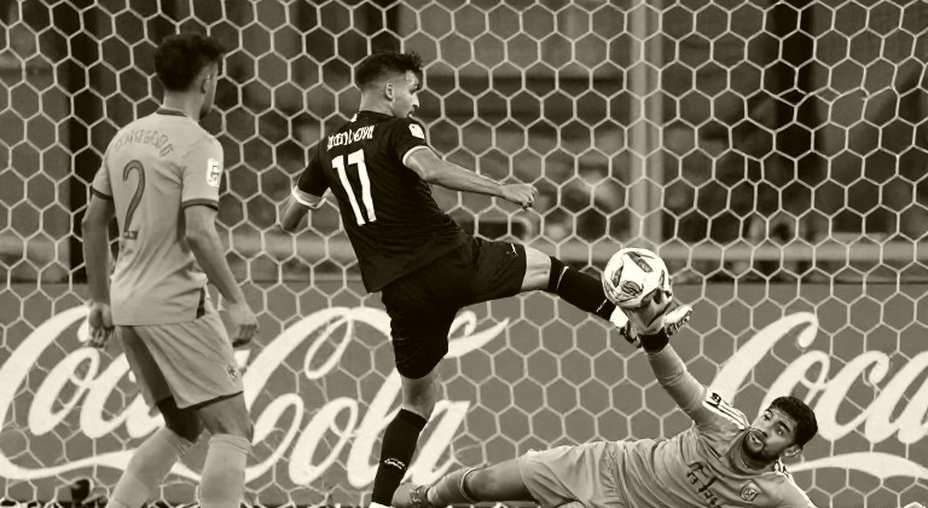
In September 2026, Megan Rapinoe knelt during the anthem before a US women's national team match. The response was swift and came from above: the US Soccer Federation issued Policy 604-1, requiring all players to stand during the anthem at international matches. One sentence, one clause, one rule. No vote, no public debate.
The policy survived nearly four years and was repealed in June 2026, under pressure from the protests that followed the killing of George Floyd. The notable part lies elsewhere: during the entire period Policy 604-1 was in force, virtually no player was sanctioned for breaching it. An explicit sanction does not need to be applied to have effect. Its existence is enough.
In another league, the NFL issued its 2026 anthem policy, requiring players on the field to stand, permitting those who did not wish to stand to remain in the locker room, and allowing clubs to be fined. Two years later, the policy was withdrawn. Between those two dates lies a gap: Colin Kaepernick played his final NFL game on January 1, 2026, and never played another. He left the league at 29, after a season in which his passing numbers were rated above average. There was no announced ban. There was only a gap on a roster.
In MLS, the story repeated in a different shape. In 2026 the league banned the Iron Front symbol — associated with the anti-fascist movement — from its stands, arguing that politics did not belong in football. After fierce backlash from its own supporters, the league had to loosen the policy the same year. Once again, what was being managed was not conduct, but expression.
Three stories, three sports, three levels of organisation — and one structure. The power to decide what may be said in a space owned by an institution does not sit with the speaker. It sits with the contract holder.
Return to the figure quoted above: roughly $7 billion for an American football club. Over the same period, that owner also owned a football club. American soccer, until recently, operated inside the same financial ecosystem as the other professional leagues: shared owners, shared stadiums, shared sponsorship deals, shared event calendars. The line between a concert night and a match on the same turf is far thinner than audiences imagine.
The data gap, and why it matters
This is the part that has to be said plainly, because reading numbers is my job.
Based on my experience tracking matches and operational files, a public accusation usually leaves a trace. A leaked email. A published contract. A recording. A signed statement. In this story, as of now, none of those have surfaced publicly. All we have are statements.
That throws the entire weight of the story onto the speakers. Three artists say they left because they could not speak. One artist says a club owner's hand was involved in removing someone. Another artist says promoters and venue owners made the call. Three versions, and none accompanied by documentation.
In my work, I test every finding with one question: is this verifiable? If the answer is no, the finding still has value, but its value lies elsewhere — it tells you something about the teller, not the event. Here, what is credible is not the story of who called whom. What is credible is the pattern: within two weeks, three people chose to walk away from a lucrative tour rather than stay silent. That behaviour carries a cost. People do not voluntarily pay a large cost over something trivial.
There is another point football should read slowly. During a regular season we read the table every week. We know who scored, who assisted, who ran the most. We rarely know who chose not to speak. Yet in football, the most important decisions usually come from the silent group: a player who does not sign an extension, a coach who does not take questions, a club that issues no statement. That silence is where the information lives.
A season is not the sum of 38 matches; it is the repetition of 17 forgotten passes. Three resignation letters in two weeks play the same role: they reveal a pattern, not an isolated event.
The counterintuitive angle: do not turn empathy into an indictment
The hardest part comes now: the part that forces me to doubt myself.
The greatest temptation in a piece like this is to turn it into an indictment. A billionaire owner, a sidelined artist, an angry crowd — every piece fits the story of the powerful and the powerless. And that story, like every story that fits too perfectly, needs checking.
What we know for certain: Macklemore is off the bill. Rowe left. Beoga left. Sheeran says venue owners and promoters decide. Macklemore says Kraft's hand was involved. That is four events and two allegations. Nothing more.
What we do not know: who made the decision, on what basis, whether there is a document or only a phone call, and whether Kraft had a real role or is simply the name attached because he is the most recognisable figure in that chain. The difference between those two scenarios is enormous. The first is deliberate intervention. The second is a crowd effect in which a famous person is named merely for being present where something happened.
In a corridor, if you only look toward the light, you will miss what stands in the dark. Here, the light falls on Kraft because he is famous and rich. The darkness is where the contract clauses sit, where the people drafting venue rental policies sit, where the sponsors who called to ask about brand risk sit. If the story ends with one name, it will miss most of the mechanism.
One other possibility deserves airing: the decision by three artists to leave was also a brand decision. For artists with young audiences, publicly taking a side can carry value. Statements on Palestine over the past year have become part of the identity of many artists in many markets. I say this not to diminish their motives — I say it to show that a decision can be both sincere and advantageous. Data cannot distinguish the two. Neither, often, can people.
And one more thing. When Arnold Schwarzenegger said “I'll be back,” he was not talking about speed. Nor is Ronaldo at 9.8 km/h. Real power is not about who speaks loudest this week, but about who is still sitting there when the week is over. The venue owner will still be there in September, in October, and next season. That is the variable worth watching.
One more clarification to avoid a false conclusion. The fact that a structure permits veto power does not mean veto power was used in this particular case. Correlation is not causation. The existence of a mechanism and the activation of that mechanism are two different questions, and the second remains unanswered.
Signals to watch before September 19
There are three signals I will track before the tour restarts in Philadelphia.
The first is whether promoters and venue owners issue any formal statement. If they do, it will confirm or refute Sheeran's account of who holds decision-making power.
The second is a response from Kraft Sports Group. This is the only thing that can move an allegation from rumour to record, because only the accused party holds the communication history between the parties.
The third is ticket data for the remaining dates. If sales hold, the market has just answered that this controversy carries no price. If sales fall, the answer is equally clear.
Football has learned this lesson many times. Clubs can dissolve, seasons can stop, but data never stops telling stories. And the story it tells here is simple: whoever holds the keys always has more options than whoever stands on the stage. The remaining question of the season is whether anyone can force them to open the door.