
Tiger Woods Returns to the Range: The Distance Between a Shot and Competitive Readiness
Q: Tiger Woods đã trở lại tập bóng khi nào và ở đâu? A: Tiger Woods xuất hiện trên khu tập bóng lần đầu tiên kể từ vụ tai nạn xe hơi hồi tháng Ba, trong một đoạn video ngắn anh tự đăng lên tài khoản Instagram cá nhân, gắn với một sự kiện từ thiện do anh tổ chức cho quỹ TGR Foundation. Key facts: - Tiger Woods có 15 danh hiệu major trong sự nghiệp. - Anh bị thương nặng ở chân phải trong vụ tai nạn xe hơi hồi tháng Ba. - Đoạn video ghi lại buổi tập bóng dài mười chín giây, đăng trên Instagram cá nhân. - Sự kiện liên quan là hoạt động từ thiện gây quỹ cho TGR Foundation, không phải giải đấu được công nhận. - Trích dẫn của Woods rằng anh "có thể đánh được gần như mọi thứ" là tự báo cáo, không phải chỉ số đo lường. Q: Buổi tập bóng có chứng minh Tiger Woods đã sẵn sàng trở lại thi đấu không? A: Không. Khu tập là môi trường có kiểm soát với tải trọng thấp, không kiểm tra được sức chịu đựng thể chất và tâm lý của bốn vòng đấu giải đấu thực tế. Q: Cần theo dõi những tín hiệu nào tiếp theo? A: Các tín hiệu quan trọng gồm sự xuất hiện trong một vòng đấu được công nhận, thông tin y tế cụ thể về chân phải, và việc mở cửa các buổi tập cho báo chí. Q: Strokes Gained là gì và vì sao nó quan trọng với phân tích phong độ? A: Strokes Gained là nhóm chỉ số chia hiệu suất thành các kỹ năng tách biệt gồm Off the Tee, Approach, Putting và Around the Green, cho phép đo chính xác điểm mạnh và điểm yếu từng phần của một người chơi.
On my phone screen, a nineteen-second video. A man in a dark polo shirt standing in a practice bay. A driver in his hands. The ball climbing into a grey sky. Behind him a metal net, no grandstand, no applause, no flickering scoreboard. Only the sound of the club cutting air and the ball leaving the face — a sound anyone who has ever stood at a range recognises even without seeing the frame.
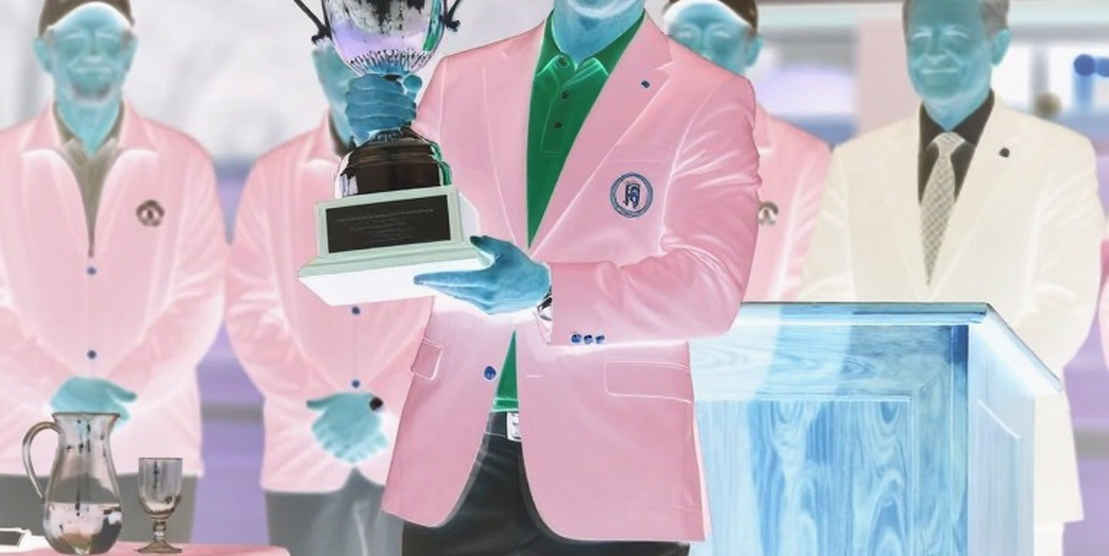
That was Tiger Woods, hitting a ball on camera for the first time since the car crash in March. He is a fifteen-time major champion. He once made an entire generation pick up a club because they believed a swing could be that beautiful. And that night he posted a short clip on his own Instagram account, with no media intermediary, no press release, no announced return schedule.
Nineteen seconds. The whole golf world talked about it for a week.
I sat at my computer and replayed the clip three times. What struck me was not the shot. It was what was not broadcast — no measurable number, no declaration, no date. Only a short remark he gave reporters on the sideline of a charity event, roughly that he could hit pretty much anything.
One sentence. One range shot. And a media wave that rose higher than any tournament that week.
Context: When a swing becomes a public asset
I have followed Tiger Woods since 2026, when he wore green at Augusta and made people believe men's golf could have a Black star who won his first major and forced an entire sports industry to rewrite its marketing textbooks. More than two decades later I moved to Boston, writing for the American market, and I still remember standing at a range years ago — the strange silence whenever he walked in, the crisp explosion of ball on face, then hundreds of cameras clicking in unison.
In professional sport, a swing is not only technique. It is an asset. With Woods, the swing is also a macro indicator for an entire adjacent economy: ticket prices, television contracts, equipment sales, traffic on golf news sites. Nobody on tour — including today's young stars — can move the numbers the way he does simply by standing on a range.
The crash in March turned almost all of that asset into a question mark. He was seriously injured in his right leg, pulled from the car through the passenger door, went through complex surgery, and vanished from every lens for months. In that gap, golf shifted: LIV appeared and split the money flow, a new generation took the crown, and majors were played without the man many consider the soul of the sport.
That is the backdrop a nineteen-second clip walked into.
Core analysis: A range is not a course
This is the first distinction that needs to be drawn. A range session is not a competitive test, and the gap between the two is larger than most fans imagine.
A range is a controlled environment. Flat ground. A perfect lie after every shot. No rough. No bunker at an awkward angle. No wind reading under pressure. No moment where a three-metre putt decides a week of a caddie's wages. And no four consecutive rounds over sloping ground, in harsh sun, carrying the psychological load that every elite player knows weighs many times the shot itself.
In tour data, performance is split into distinct metric families: Strokes Gained Off the Tee, Strokes Gained Approach, Strokes Gained Putting, Strokes Gained Around the Green. These measure four different skill sets. None can be inferred from a nineteen-second video. No ShotLink captures a practice session. No Data Golf builds a sample. No green-in-regulation rate, no average drive distance, no accuracy.
So where is the technical signal in this story?
It lives in a short quote from Woods himself: that he can hit pretty much anything. This is self-report, not measurement. It states capability, not readiness. Between those two things lies an entire sky — because "I can hit" is what a player says about his body in a light session, while "I can sustain four rounds under tournament pressure" is only answered after four real rounds.
If there is one line I want carved into the range of every sports event, it is this: the range answers the question of mechanics, while the course answers the question of the person.
And this is where I usually step away from the mainstream feed. Articles about a "return" tend to follow a familiar formula: see the player appear, infer a competitive return, infer form, infer title chances. Four inferential steps while the evidence covers one. The distance between step one and step four is where optimism gets built out of belief instead of data.
Another point deserves clarity. A swing at this age is not the swing of a twenty-year-old. Research on age curves in golf shows players typically peak in composite skill between twenty-eight and thirty-eight. Beyond that, driving distance begins to fall, recovery from injury slows, and maintaining stable technique across four rounds becomes far harder than producing one beautiful shot in a practice bay. Golf allows long careers, but it does not exempt anyone from biology.
For a man who has just come through severe trauma, those curves stack non-linearly. The body is not merely older. It carries scar tissue. Every range session becomes a small test of load tolerance — and because range load is many times lighter than tournament load, a small test result says nothing about the large test.
The only thing the video truly confirms is this: Woods still holds a club. He can still stand in a hitting posture. He can still make a ball fly. All three are good news for his health. None is competitive news.
The charity event and the humanitarian shell of coverage
The video did not appear at random. From what I can gather, it was tied to a charity event hosted by Tiger Woods to raise money for the TGR Foundation — the education-focused organisation he founded years ago.
This matters: that event is not a sanctioned tournament. It awards no world-ranking points. It has no bearing on the FedExCup or season standings. It is not a place where real competitive form is measured.
It is a charity stage — a low-risk space that lets a recovering player appear publicly without committing to anything about his schedule. And that is exactly what Woods's team wants: presence in front of the public while retaining full freedom behind it.
In those nineteen seconds, we see one shot. Behind the communications strategy, we see a carefully weighed move: use his own channel to control the message, use the charity event to soften the context, and use the shot to send the smallest possible signal that the body is progressing, without accepting any competitive obligation.
Zoom out and this is how modern sports media operates around big names: charity becomes a stage, a personal channel becomes a wire service, one shot becomes a press release. Fans get a morsel big enough to sustain hope. News sites get a topic big enough to sustain traffic. And the player gets a gap big enough to keep recovering without being pushed.
All three win. But only one side knows the truth has not yet been told.
A carefully packaged light practice session can outdraw a peak tour round — which is exactly why media chases it, even while knowing it proves nothing about form.
Counter-intuitive angle: When "first time since" becomes a genre
There is a pattern newsrooms use many times a year: "first time since X." First time since injury. First time since the crash. First time since being sacked. It is a convenient structure, because it turns an ordinary event into an emotional milestone, and emotion travels with engagement.
The price of the pattern is inflation of small events. A name being called on a range is not, by itself, news. It becomes news because of the context that produced it: the crash, the absence, the memory of the great years. Strip those layers and the video is one shot. And millions of shots happen every day on courses worldwide.
This is why I want to speak very slowly about a "return." A return to the range does not mean a return to competition. A return to competition does not mean a return to contending. A return to contending does not mean a return to winning. Each step is a different notch in physical demand, emotional difficulty, and the number of doors that must be opened. Mixing those notches is the fastest way to build an expectation with no floor.
And here I remember a line I once wrote in a personal notebook, after an afternoon watching an empty practice range: "The wind I recorded that year still blows in me whenever the ground is empty."
I wrote that in 2026, mid-pandemic, when I recorded wind through the empty stands of a derby and put it on my podcast. I recall someone messaging me that the recording made them feel less alone. Golf has recordings like that too — takes with no shot in them, only the venue, only the footsteps of fans walking past, only the silence before the starting gun.
And I remember another line: "The ground is empty, and the wind still keeps time for the ball."
Through my career covering sport, I have learned that the value of a signal is not its size but its origin. A shot on a practise range with no crowd says a great deal about the person behind the club. It says very little about competitive capacity. Confusing the two is confusing the map with the territory.
There is one more layer Vietnamese sports media should note. In America, whenever Woods appears, three types of content are produced instantly: news (the shot just happened), explainer (what the shot means), and speculation (what the shot shows about what is next). The third is the most attractive and the most error-prone. In most cases it survives scrutiny because it makes no falsifiable claim — it only asks, suggests, leaves open. And when the truth arrives months later, no one is obliged to correct a post.
I refuse to play that game. If I write about a shot, I write that it is a shot. If I discuss a return to play, I state that no schedule has been announced. And if I must describe what it all means, I describe it in a way a reader can later check against what actually happened.
This honesty can sound dull. But in an industry where hundreds of stories are inflated and forgotten every week, holding one small standard is worth something.
What to watch in the weeks ahead
When a small signal appears, the important question is not "what does it mean." The important question is "what comes next." With Woods, the next signals I will look for:
First, the appearance of real tournament rounds. Not the range. Not a charity pro-am. A round in a sanctioned event, with a leaderboard, against in-form opponents, over four rounds and a cut.
Second, any team statement on the condition of the right leg. Not an emotional interview, but specific medical detail. If the leg is not ready for tournament load, we will know through a delayed schedule.
Third, open practice sessions for media. When he starts letting others see more than nineteen seconds, the team is moving toward a public preparation phase.
And fourth, what Woods himself says. He said he can hit pretty much anything. I do not need him to say what he can hit. I need him to hit.
We often read silence as a good sign when it concerns someone we love. But in professional sport, silence is usually just silence. It promises nothing, denies nothing, guarantees nothing. The only guarantee is this: if there is a real shot in a real round, we will know the same day.
In the meantime, I keep a wind recording in my machine, captured years ago when the stands were empty. Because one thing a range shot has taught me more clearly than anything else: the sound of a ball leaving the club can ring in an empty grandstand, and it still rings. But for the stands to fill again, it takes more than one shot.
It takes a person walking in and standing there for a week.
My question, for the weeks ahead, is not how far Tiger Woods can hit it. It is whether he wants to walk onto a real course, with his full injury, his age, and the memory of falls, to start over. And if the answer is yes, I will be there — not to write about the first shot, but to see whether the last shot of a career is still long enough to tell another story.