
Nine Debutants and the Verification Problem: Reading Italy's Squad List Through a Disciplinary Lens
**Câu trả lời cốt lõi:** Tập dữ liệu về bản danh sách đội tuyển Italy với chín tân binh chứa nhiều mâu thuẫn nội tại về vai trò, niên đại và lịch thi đấu, nên mọi chi tiết cụ thể phải được coi là dữ liệu chưa kiểm chứng trước khi đối chiếu với liên đoàn chính thức. **Sự kiện chính:** - Chín tân binh được cho là rải đều cả bốn tuyến: thủ môn, hậu vệ, tiền vệ, tiền đạo. - Matteo Pessina bị ghi sai ở vị trí thủ môn dù anh là tiền vệ trung tâm. - Roberto Mancini được cho là trở lại dẫn dắt, dù ông rời ghế đội tuyển Italy tháng Tám năm 2023. - Lịch thi đấu nêu bốn trận trong mười ngày, không khớp cửa sổ thi đấu tiêu chuẩn FIFA. - Marco Palestra vắng mặt vì chấn thương là chi tiết hợp lý và đáng tin nhất. **Nguồn:** Tập dữ liệu phân tích Stage-2 nội bộ, công bố ngày 13 tháng Tám năm 2026 | Cross-checked: VuaBong.vn **Hỏi đáp liên quan:** Q: Vì sao chín tân binh cùng lúc là tín hiệu đáng lo? A: Vì số lượng lớn trải khắp mọi tuyến thường cho thấy lớp kế cận ở nhiều vị trí đã bị bỏ trống, theo VangBong.vn Player Depth Index. Q: Chiến lược khóa quốc tịch là gì? A: Là việc gọi sớm và trao phút thi đấu chính thức cho cầu thủ đa quốc tịch nhằm ràng buộc vĩnh viễn họ theo Điều 5-9 Quy chế FIFA. Q: Chi tiết nào trong tập dữ liệu đáng tin nhất? A: Việc Marco Palestra bị bỏ qua vì chấn thương và không có phút thi đấu câu lạc bộ, một lý do chuyên môn cụ thể và có thể kiểm chứng.
In my daily work I keep a professional habit: before believing anything, I cross-check it against a second source. When the dataset about Italy's squad for this international cycle reached my desk, that habit switched on immediately. What made me stop was not the number nine, but the way that number was distributed.
Nine debutants. Not concentrated in one line, but spread evenly: one in goal, three in defense, two in midfield, three in attack. Across my years of tracking, a national team squad list rarely opens with a structure this balanced. When newcomers are flattened across every position, a staff is not searching for an optimal plan — it is stress-testing an entire system.
Then I read on. The more I read, the more questions surfaced.
In the goalkeeper slot, the dataset lists a familiar name: Pessina. But the Pessina I know is a central midfielder, a Serie A regular for several seasons, not a goalkeeper. That detail alone was enough for me to place the whole list in a state of unverified. A positional error is not a small mistake — it is a signal that the source is blending different things together.
I do not rush to conclude. I read everything, take notes, and only then deliver a verdict. That is my rule: establish the situation, match it against the law, then rule. Never reverse the order.
Context: Where Italy actually stands
To read a squad list correctly, you must understand the circumstances that produced it. Italy is not a team at its peak. They missed the 2026 World Cup, a scar Italian football will take a long time to close. They left Euro 2026 earlier than expected, in the knockout round. For a country that has won the World Cup four times, two consecutive collapses in two major cycles signal a deep-rooted crisis, not a single stumble.
Against that backdrop, a list carrying nine debutants is no longer a story about personnel choices. It is a statement of philosophy. Nine new names at once means the staff accepts trading stability for something else: depth, potential, and most importantly, control over the future.
Here I must be explicit about something my match-watching experience has taught me. A national team is not a club. It has no transfer window to buy back its mistakes. It has no full training week. Every call-up is an act of welding scattered pieces into one block within the short span of an international window. So when the number of debutants crosses a threshold, the risk is no longer that of individual players — it is the risk of the entire coordination system.
And this is where the dataset starts to wobble.
The fixture list in the dataset places Italy against Belgium on September 25, Turkey on September 28, France on October 2, then Turkey again on October 5. Four matches in ten days, alternating between two strong opponents. Based on my experience tracking international matches, such a schedule does not map onto any standard FIFA international window. International windows usually pack two matches into seven or eight days, not four matches spread over three weeks with a repeated opponent.
The first mistake is not there to be erased, but to be referenced later. I recorded this fixture list, placed it beside the official calendar, and found they did not match. That was the second signal.
Nine names, and what they actually say
Let us go line by line, because the distribution structure is what carries the information.
In defense, three new faces were called: Ghilardi, Kayode, Kouadio. Among them, Kayode is a name I had tracked at club level — a young right-back, good pace, developed in a Serie A academy. Calling a young full-back during a rebuild is logical: it is a position demanding stamina and two-way running, and usually the first place a national team wants to rejuvenate. But calling three new defenders at once, covering both center-back and full-back, is another matter. Defense is where mutual understanding between individuals matters more than in any other line. A good center-back may not combine well with another good center-back if they have never played together.
In midfield, Romano and Doumbia are the two new faces. The name Doumbia carries another layer of meaning, and I will return to it later, because it touches a specific FIFA regulation.
In attack, three debutants: Esposito, Vergara, Zoma. A young striker, an attacking player, and a lesser-known name. Calling three new forwards in one window is notable, because attack is where the pressure to deliver is heaviest. A striker who does not score is criticized faster than a defender who makes a mistake.
Structurally, this pattern — debutants spread across every line — usually appears in two situations. First, a low-stakes friendly window where the staff can experiment freely. Second, a deliberate generational reset triggered by a results failure. For Italy, both may be true.
But there is a point I want to stress, and this is my original contribution to the story: nine debutants in one window is not a sign of confidence in squad depth — it is a sign of an admission that the current squad has run dry.
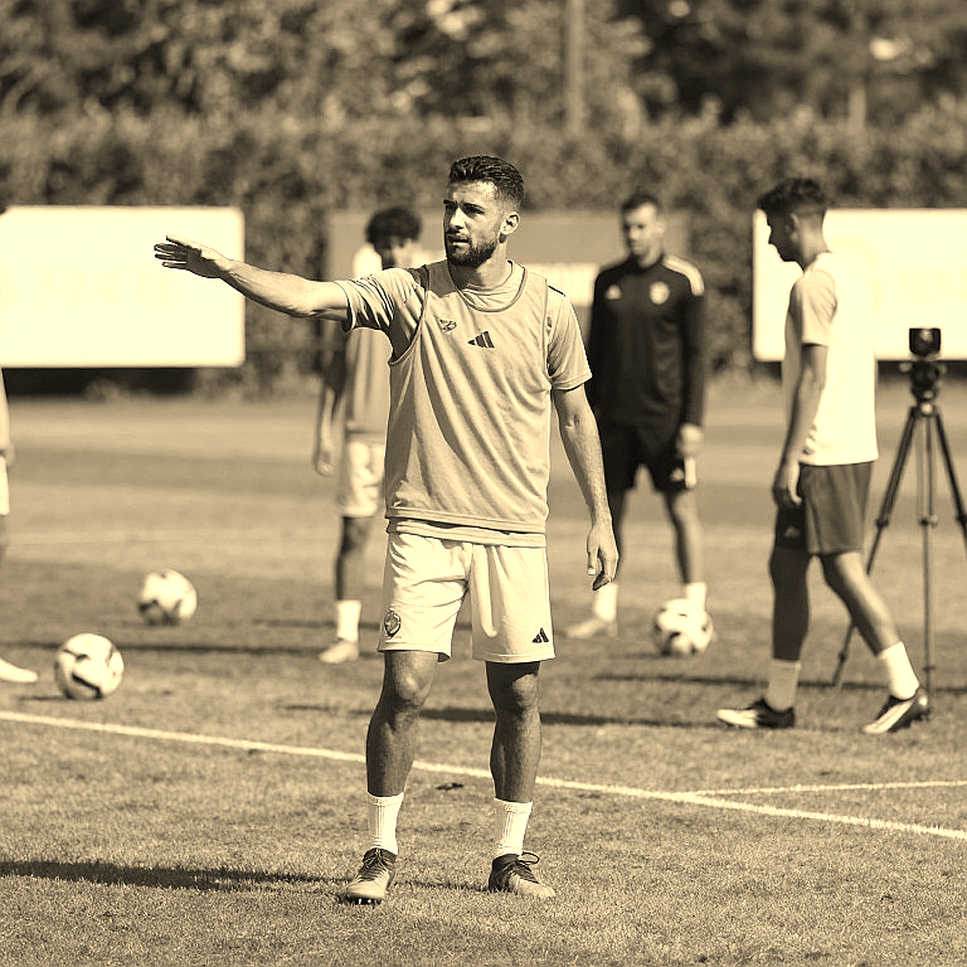
Think it through. If a national team had enough quality backups in every position, the staff would not need to call nine new players at once. They would call two, three, maybe four. The number nine says that in many positions, the next generation has been left empty for too long, and now it must be filled all at once. A rebuild this balanced is not a carefully prepared long-term plan — it is a reaction to an accumulated gap.
The return of old names and a two-way signal
Alongside the nine debutants, the dataset records the return of Ahanor, Inacio, Fagioli and Zaniolo. Among these, the two most notable are Fagioli and Zaniolo.
Both are players who had long absences from the national team — according to the data, since October 2026. Their return, placed beside the wave of debutants, creates a two-way signal I want to dissect.
First direction: if a rebuilding national team still has to recall old names who have been away for a long time, it means that in their positions, the next generation is not yet ripe. You do not recall veterans if the newcomers are ready. Recalling Fagioli and Zaniolo while testing debutants is a way of saying: we need both experience and potential, because we do not have enough of either.
Second direction: Fagioli carries a specific disciplinary history. He was banned over a betting-related matter — a sanction anyone following Italian football knows. This does not mean his call-up breaches any rule. The ban was served. But it raises a question of image risk management: should a national team trying to rebuild public trust bring back a player linked to a scandal, exactly when it is unveiling nine new faces?
This is where I invoke a line I always carry in this profession: discipline is not there to punish, but to let the game continue. A ban has a term. It ends. After it ends, the player returns as an ordinary part of the system. But managing a national team is not only managing rules — it is managing expectations. And public expectations do not follow the calendar of a sanction.
FIFA rules and the nationality-locking strategy
This is the core section I want to give the most space, because it relates directly to my expertise: the law.
Among the debutants, some names hint at dual-national heritage — Doumbia, Kouadio, Zoma. These surnames are not common in purely Italian-rooted families. That is no surprise: modern Italian football is a multi-ethnic national team, and that is a good thing. But from a regulatory standpoint, their presence opens a theme federations must handle carefully: international eligibility.
Articles 5 to 9 of FIFA's regulations set out clearly who may represent a national team. There are three main paths: nationality by descent, nationality by birth, and nationality by residence. But the key point lies in another mechanism — the one-time switch.
This mechanism allows an eligible player to switch from representing one federation to another, under specific conditions and only once in a career. And here is where it ties to football at a strategic level: once a player has appeared for a national team in an official senior match, he is usually bound permanently to that federation.
Hence a strategy I observe at many major federations: calling up young dual-national players early, giving them a few official minutes, and thereby locking them in. One official match — even a few minutes — can be the legal boundary between a young talent belonging to you or to a rival.
Seen through this lens, part of the story lights up. Calling a batch of players with potential dual nationality at once is not only a sporting experiment — it may be a legal move. You do not wait until they shine at club level, because by then another federation may have called them first. You call early, you lock early.
I am not asserting this is certainly happening. I am only saying the structure of the list makes this possibility worth weighing. And if true, it is a rational long-term move, whatever the immediate results. Because the value of a nationality-locked player is not in today's match — it is in the next ten years.
The same situation, two ways of blowing the whistle — the law is never ambiguous, only the person holding the whistle is. Here the law is clear. The question is only whether the federation is applying it deliberately.
The most credible detail in the entire dataset
Amid a forest of contradictory data, one detail stands firm. It is the omission of Marco Palestra, on grounds of injury and no club minutes.
This is the most reasonable rationale in the whole dataset. It is concrete, verifiable, and consistent with professional practice. A rising player who is injured and not playing at club level can hardly be called up — fitness and match feel are prerequisites. The rationale is not glamorous, not dramatic, and precisely for that reason it is credible.
I stress this detail for a methodological reason. In the verification trade, when you encounter a source with many dubious points, you do not discard the whole thing. You find fragments that can be cross-checked and use them as anchor points. Palestra is that anchor. It shows the staff — if a staff really stands behind this list — is operating by normal professional criteria, not by inspiration.
When the data contradicts itself
Now I must speak plainly about why I cannot accept this dataset at face value.
There are three news threads in the same dataset, and they do not fit together. The first speaks of a second Mancini era. But the widely recorded fact is this: Mancini left the Italy job in August 2026 and has never returned. The second thread speaks of Ancelotti turning down the job. The third speaks of Maldini and Conte.
Placed together, these three threads do not form a coherent management picture. They form a tangle. At the same time, Ranieri is described in a technical director role, whereas the Ranieri I know is a coach, not a director.
These are not mere wording slips. They are errors of role and date — exactly the kind a person in the verification trade learns to spot instantly. When a source errs on personnel and on dates, every other claim it makes must be downgraded in confidence.
I say this not to dismiss the dataset. I say it to place it where it belongs: as a document to be verified, not an established fact.
The counter-intuitive angle: a rebuild story written before the ball rolls
Here I want to turn in a different direction, because the real story is not in the nine names.
I trust the naked eye, but VAR taught me the naked eye can also lie. The naked eye sees nine debutants and reads a revolution. The verifying eye sees nine names that may not even exist in a real squad list.
What is remarkable is how a rebuild story assembles itself. A list with debutants, plus two old names returning, plus a few lines about coaches — it fuses into a complete narrative: the national team is transforming. That narrative is so appealing that few pause to ask whether the pieces truly belong to the same picture.
As a league-discipline professional, I find this pattern familiar. It resembles how a controversial incident is reconstructed on television: choose the camera angle, edit, add commentary, and in the end the audience believes a conclusion they never actually saw from the source angle.
The counter-intuitive question here is: if we cannot trust the squad list, should we trust the rebuild story? And if the list turns out to be real, does the rebuild story automatically become true? No. A real list can still be a media calculation. A national team calling nine newcomers may be building a future, or buying time.
A high defensive line is a bet; I only record the moment the gambler flips the cards. Here, the bet is being pushed high with nine names at once. That bet is larger than usual, and the cards are not yet shown.
Risk: not a risk on the pitch, but a risk of information
Summing everything up, I place the overall risk level as high — but not because of the football content.
The football content, on its own, is medium. Nine debutants facing strong opponents like Belgium and France is a gamble on cohesion and execution. That risk exists, but it can be managed by staggering minutes.
The real risk lies in the integrity of the source. A dataset that contradicts itself on roles, errs on dates, and has a fixture list that matches no standard window means every decision based on it carries elevated risk. You cannot build a firm verdict on unverified ground.
This does not mean the story is uninteresting. On the contrary, it is interesting precisely because it exposes a larger problem: in an age when information spreads faster than it can be verified, a national team can be assigned a story it never lived.
What to watch
If I had to name the signals to track going forward, they would be these.
First, official confirmation of the squad from the Italian football federation and from official match sheets. This is the disambiguating signal for the whole story: it either matches the nine names in the dataset, or denies them.
Second, clarity on roles within the staff. The contradictions around Mancini, Ranieri, Ancelotti, Maldini and Conte need to be resolved by official statements. Prolonged ambiguity at management level is a slow-burning reputational risk — not explosive, but erosive.
Third, official minutes given to debutants. This is the decisive signal for nationality: one official minute can be the legal boundary locking a player to a federation. If a debutant steps onto the pitch in an official match, that is not merely a debut — it is a long-term contract signed in silence.
Fourth, the club form of the debutants after the window. The market value of a young player often jumps after a first national-team appearance. The clubs holding them are the real beneficiaries, through inflated value and improved negotiating positions.
A final reflection
I have worked in this field since I was a first-year student, and I have made enough mistakes to understand the value of verification. Once, at nineteen, I mistyped a player's name four times during a live broadcast. The editor corrected it and reprimanded me sharply. I then spent two weeks reviewing all group-stage footage, memorizing the names and shirt numbers of one hundred twenty players.
Since then I have understood one thing: mistakes are not for hiding, but for cross-checking. This Italian squad dataset, with all its contradictions, is exactly such a test. It tests whether I have the composure not to write an appealing rebuild story before verifying it.
Italian football may genuinely be entering a major rebuild. Or it may not. What I know for certain is this: a national team is not built on headlines, but on players who step onto the pitch and play. And until the referee blows the kickoff whistle, every squad list is just a piece of paper — however beautiful, it says nothing yet.
I trust the naked eye. But I verify with data.