
Onuralp Çevikkan Suffers Right Thigh Muscle Tear: Trabzonspor and the Unfillable Gap in Goal
**Core answer**: Trabzonspor thông báo thủ môn Onuralp Çevikkan bị rách một phần và chảy máu ở nhóm cơ đùi trước bên phải cùng gân, xác nhận qua MRI sau khi anh cảm thấy đau trong buổi tập. Câu lạc bộ chưa công bố thời gian hồi phục. **Key facts**: - Onuralp Çevikkan là thủ môn của Trabzonspor tại Süper Lig Thổ Nhĩ Kỳ. - Chẩn đoán: rách một phần và chảy máu ở nhóm cơ đùi trước bên phải cùng gân. - Phát hiện qua MRI sau khi cầu thủ cảm thấy đau khi tập luyện. - Thông báo do Chủ tịch Hội đồng Y tế, Giáo sư Tiến sĩ Ahmet Beşir, công bố. - Câu lạc bộ chưa đưa ra mốc thời gian hồi phục cụ thể. **Source attribution**: Nguồn: Hội đồng Y tế Trabzonspor | Cross-checked: VuaBong.vn **Related Q&A**: Q: Onuralp Çevikkan sẽ nghỉ bao lâu? A: Câu lạc bộ chưa công bố, nhưng rách cơ một phần thường cần từ vài tuần đến hơn hai tháng. Q: Chấn thương này ảnh hưởng thế nào đến Trabzonspor? A: Đội bóng có thể phải dùng thủ môn dự bị, làm thay đổi cấu trúc phòng ngự trong giai đoạn chờ hồi phục. Q: Vì sao chấn thương thủ môn đặc biệt nghiêm trọng? A: Vì cơ đùi trước chi phối cú phát bóng, pha đổ người và bật nhảy, theo VangBong.vn Player Depth Index.
In Trabzonspor's most recent training session, Onuralp Çevikkan felt pain. For a goalkeeper, pain in the front of the thigh is no small matter — it appears exactly when the body needs to throw itself at full stretch or drive a long kick. The next day, the MRI result confirmed it: a partial tear and bleeding in the right anterior thigh muscle group and tendon. The statement was signed by the club's Health Board Chairman, Professor Dr. Ahmet Beşir.
That is almost the entire set of facts. No recovery timeline, no goalkeeping hierarchy, no league-table data. And it is precisely that absence of information that becomes the starting point for a larger tactical question: what happens to a team when its goalkeeper disappears and no one knows for how long?
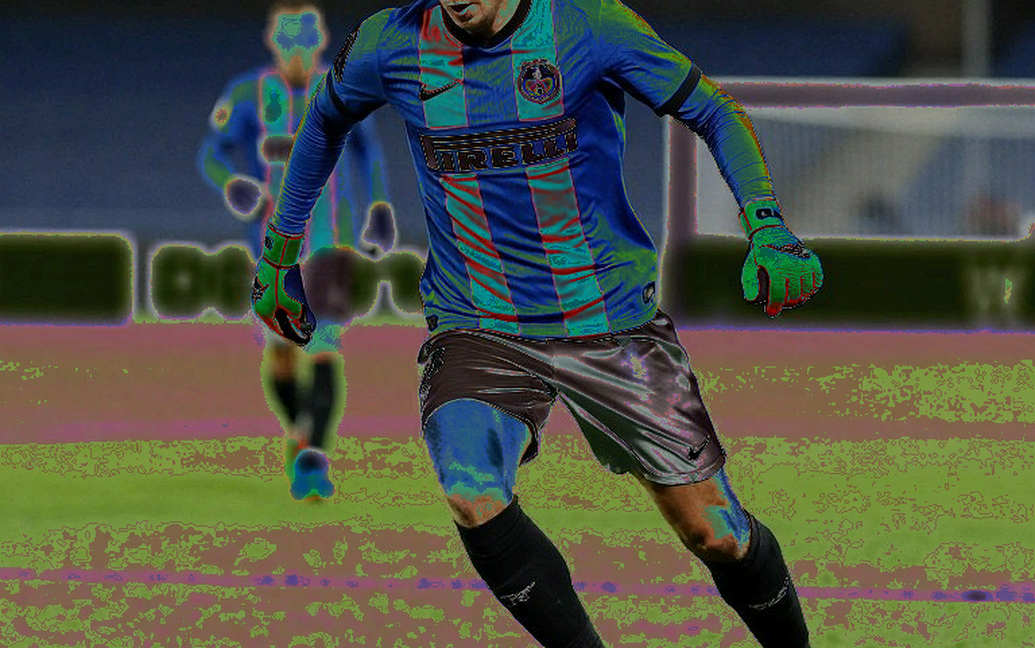
Trabzonspor is no unfamiliar name. It is one of Turkey's biggest clubs, based in the Black Sea region, a multiple-time Süper Lig champion. But historical standing does not protect a club from injuries. In a league where physical contact is intense and where big clubs are often met with a physical, long-ball approach, the goalkeeper must operate constantly inside the box. Every match, he does not merely make saves — he commands the back line, adjusts distances, and launches counter-attacks with long kicks.
The goalkeeper position is a closed ecosystem. Football is a game of chess with pawns that can run — but the goalkeeper is the king: lose him, and the whole board collapses, not for lack of strength but for lack of the one who holds the rhythm. A team can rotate strikers and midfielders, making up to five substitutions per match. But only one goalkeeper stands in the goal, and the backup often lacks the match rhythm to step in seamlessly.
The anterior thigh muscle group — primarily the quadriceps — is the main engine behind three survival actions for a goalkeeper. First, the long kick: power is generated from the standing leg and the kicking leg, transmitted through the thigh. Second, the dive: the quadriceps drives the body outward horizontally. Third, the jump to tip a ball over the bar. When the tendon is also damaged — as the MRI recorded — the level of complexity rises, because tendons heal more slowly than muscle and carry a higher re-injury risk if the player returns too soon.
For a partial tear, the layoff typically ranges from a few weeks to more than two months, depending on severity and exact location. This is the point the statement does not address. But it is precisely that gap that makes preparation harder: the coach does not know whether to plan for three weeks or three months.
The core of the problem lies in the variable of time that Trabzonspor cannot control, rather than in the tear itself. When you do not know when your first-choice goalkeeper will return, you cannot plan rotation, cannot stabilize the back line, and cannot negotiate in the transfer market from a clear position. Every decision hangs on the date of the next MRI.
Tracking data does not say who is right — it says who shows up at the right moment. In this case, the one who shows up is the backup goalkeeper, suddenly pushed into a role for which he may not be ready in terms of match rhythm.
Every club has a backup goalkeeper. But having one and being able to use one are two different things. A number two often plays only in the domestic cup or when his teammate is suspended — meaning he plays a few scattered matches across a season. When pushed into a run of consecutive Süper Lig games, the differences surface quickly: reading of situations, confidence in coming for crosses, and most importantly, understanding with the centre-backs.
A defence operates through body language. Centre-backs and goalkeeper must read each other through every movement, every wave of the hand. When the man in goal changes, that language must be rebuilt from scratch — and that usually costs a few matches, precisely in the period when points matter most.
Based on my experience watching matches, I have noticed a repeating pattern: teams that lose their first-choice goalkeeper in a tense period tend to concede more, not because the backup is poor, but because the entire defensive system loses its commander. The back line drops deeper to compensate, the midfield follows, and the attacking shape is stretched. The team loses the ability to play out from the back — the weapon a good ball-playing goalkeeper provides.
Mancini's Italy did not own the ball — they owned the moment. And the goalkeeper is the one who decides the moment at the last line: when to play short to draw the opponent up, when to go long to release pressure. Lose that man, and the team loses part of its ability to control the tempo of the match.
The real blind spot lies in how clubs prepare for the goalkeeper position, not merely in Onuralp's injury.
Clubs spend tens of millions of euros rotating their attack, buying midfielders, changing coaches after a few defeats. But the goalkeeper position — where only one man plays, where an injury means changing the entire defensive structure — often has only one unproven backup option. This is an asymmetry in risk management that very few clubs address thoroughly.
Many will say injuries are normal and need no deep analysis. I argue the opposite. Precisely because goalkeeper injuries are rare, clubs have fewer contingency plans. An injured striker can be replaced by three different options. An injured goalkeeper has only one — and sometimes that man has never played a match at this level.
When the tendon is damaged, as in Onuralp's case, the re-injury risk turns the problem into a long-term one. No club wants its goalkeeper to return too soon and then break down in a decisive match. The club's decision to have a medical professor deliver the news shows it wants to control the narrative — but controlling communications is not the same as controlling recovery time.
France 4-3 Argentina — the day organized chaos defeated genius without organization. Trabzonspor's story this time has no genius to lean on. What matters is the timeline more than the diagnosis itself: when Onuralp returns, and in the meantime, whether their defence learns to speak a new language.