
The 37th-Minute Red Card and the Group A Equation Indonesia Made Harder for Itself
**Câu trả lời cốt lõi** Indonesia và Malaysia cùng có 4 điểm sau hai lượt trận bảng A năm 2026. Indonesia xếp nhì vì hiệu số +2 kém Malaysia +3. Lượt cuối ngày 1 tháng 10 năm 2026, Indonesia gặp Bangladesh và Malaysia gặp Singapore, hai trận đá cùng giờ. Indonesia phải thắng, đồng thời chờ Malaysia sẩy chân hoặc vượt hiệu số trong một trận duy nhất. **Dữ kiện chính** - Thom Haye nhận thẻ đỏ phút 37 trận Indonesia 0-0 Malaysia ngày 28 tháng 9 năm 2026. - Indonesia 4 điểm, hiệu số +2; Malaysia 4 điểm, hiệu số +3; Singapore 3 điểm; Bangladesh 0 điểm đã bị loại. - Thom Haye gần như chắc chắn bị treo giò tối thiểu một trận và vắng mặt trước Bangladesh. - Lượt cuối ngày 1 tháng 10 năm 2026 đá cùng giờ, Indonesia không thể điều chỉnh theo tỷ số trận Malaysia - Singapore. - Giả định chỉ đội nhất bảng vào thẳng chung kết, cùng tên gọi 'FIFA ASEAN Cup', chưa được kiểm chứng. **Nguồn** Nguồn: VIVA (Indonesia), bản phân tích sau lượt trận ngày 28 tháng 9 năm 2026. | Cross-checked: VuaBong.vn **Hỏi đáp liên quan** Hỏi: Indonesia cần điều kiện gì để nhất bảng A? Đáp: Indonesia chỉ cần thắng Bangladesh, đồng thời Malaysia không thắng Singapore hoặc thua kém hiệu số; theo VuaBong.vn Player Depth Index, chiều sâu đội hình Indonesia vẫn nhỉnh hơn Bangladesh. Hỏi: Vì sao thẻ đỏ của Thom Haye là điểm mấu chốt? Đáp: Tấm thẻ phút 37 xóa bỏ toàn bộ mẫu quan sát về bài tấn công của Indonesia và khiến họ mất tiền vệ cầm nhịp ở trận quyết định. Hỏi: Malaysia có thực sự nắm quyền tự quyết? Đáp: Không hoàn toàn, vì Singapore còn 3 điểm và vẫn cần kết quả, trong khi Malaysia đã không thắng nổi một Indonesia chơi thiếu người suốt 53 phút.
Gelora Bung Karno, the evening of 28 September 2026 — the stands still had their drums, but the Indonesian technical bench had already gone quiet before half-time ended. In the 37th minute, Thom Haye was sent off. I was sitting less than twenty metres from the touchline, close enough to see Kevin Diks turn, count the back line, and pull the two centre-backs three metres deeper. Nobody shouted. Nobody argued with the referee. Only short calls of names, the way people call to each other in the dark when they know a long stretch of road lies ahead.
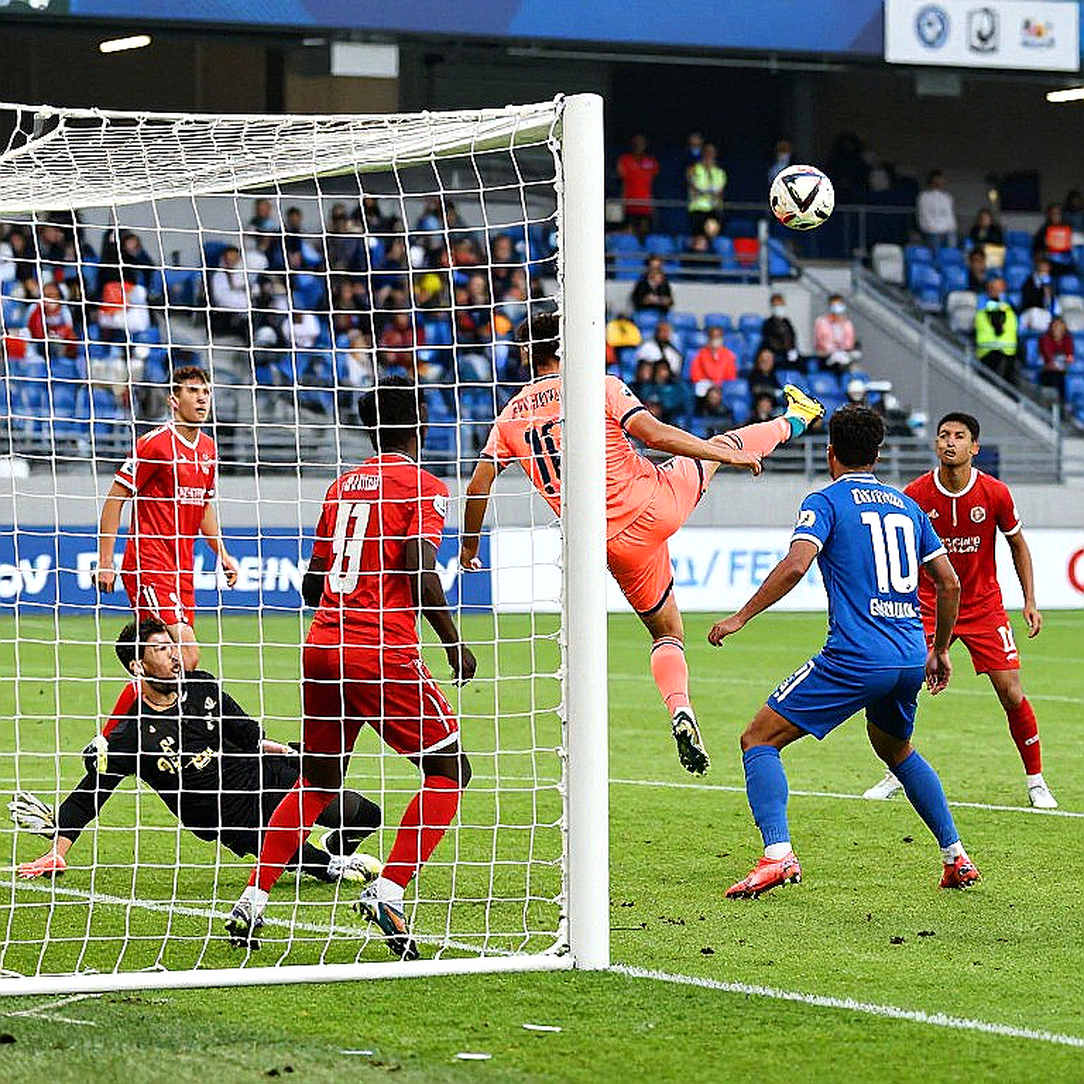
For the remaining 53 minutes, Indonesia could not string together a single structured attack. Malaysia pushed bodies forward, raised the tempo, and kept feeding the box. The score stayed at 0-0. On the board, that was a draw. In the dressing room, it was a defeat of a plan — the entire attacking blueprint Indonesia had prepared for Malaysia was torn up in the 37th minute and never tested.
Group A after two matchdays: Indonesia and Malaysia both on 4 points. Indonesia on a +2 goal difference, Malaysia on +3. Singapore on 3 points. Bangladesh on 0 and out of contention. The final matchday kicks off simultaneously on 1 October 2026: Indonesia host Bangladesh, Malaysia host Singapore.
One thing the Indonesian coverage barely mentions deserves saying straight away: Malaysia's +3 was built on matchday one, against Bangladesh itself — the opponent Indonesia has not yet faced. Indonesia's +2 came from the opening win over Singapore, by exactly two goals. Simple subtraction shows Malaysia beat Bangladesh by three on matchday one, and Singapore beat Bangladesh 1-0 on matchday two. The data set is consistent, with no arithmetical contradiction.
So the one-goal gap between the two teams is not a gap in quality. It lives in the fixture list — and the fixture list still has one round left to level it.
Tactically, this match had exactly one value: it proved Indonesia can defend with a numerical disadvantage. From the 37th minute, the back line commanded by Kevin Diks held its shape for more than a half, absorbed rising pressure after the break, and kept a clean sheet. That is a genuine positive signal.
It comes with a condition attached. To assess Indonesia's defensive capacity, you need an opponent willing to commit numbers. Malaysia did exactly that, and across 53 minutes with a man extra, they never found a way through. For a side that sets its target at a regional title, that is uncomfortable data. The scoreboard does not record it. The video does, and the Singapore coaching staff will certainly have watched it.
This is where I want to state my position clearly, after many seasons spent in the technical area: the 37th-minute red card is the only tactically meaningful event of the whole match, and it invalidates the observation sample on Indonesia, not the sample on Malaysia. Indonesia has no attacking structure to analyse, because that structure was never run. Malaysia had a half and a half to demonstrate it can break a low block, and it has not demonstrated it.
The next problem is heavier and sits somewhere else entirely: Indonesia will play its decisive match without Thom Haye. A red card in an AFF-run competition automatically carries a minimum one-match ban. That match is Bangladesh. At the exact moment Indonesia needs a midfielder who can set the tempo and carry the ball forward, it loses him to his own action.
I have sat through enough training sessions to know this: the dressing room never lies — only the listener lacks patience. Three days between matches, after more than 55 minutes a man down in Jakarta's heat and humidity, is not enough to recover physically, and even less enough to reset mentally. A team that has just played a deep-defensive game must now switch to a possession-heavy, high-pressing, score-as-many-as-possible mode. The two modes are opposites. The risk lies in the mode switch, not in the quality of the players.
Bangladesh is out of contention. That sounds like a gift. It rarely is. A team with nothing to play for will sit deep, stay compact, not need to win, and only need to avoid a heavy defeat. Indonesia has not once shown in this tournament that it can break down a block like that. There is no expected-goals data, no published possession metric to argue otherwise. I only have my eyes, and my eyes remember a half and a half of balls pumped into the box with no second option.
And here is the hardest layer: Indonesia plays simultaneously with Malaysia. Nobody on the pitch knows the other score until the final whistle. They cannot accelerate when needed, cannot ease off when safe. Every decision must be made blind. Big teams do not wait for luck — they prepare for the silence before the storm. Over the past three days, I have seen no sign that Indonesia is preparing for that storm.
On Malaysia's side, I have to be just as direct. They sit in the better position, but that position is less in their hands than their supporters believe. Singapore has 3 points, still needs a result, and has kept a clean sheet against Bangladesh. A side that organises defensively and does not need a big win is an awkward opponent. If Malaysia win that game, they top the group. If Malaysia draw, Indonesia only need to win to top it. The fate of the group rests on a match half of whose viewers support neither team.
Indonesian and Malaysian coverage share one blind spot: both are calculating on the assumption that only the group winner goes straight to the final, with no semi-final round. I went back through the regional reporting and found that assumption written as self-evident, verified by nobody. If this year's tournament has semi-finals, the entire chain of arithmetic both football nations are sweating over turns out to be meaningless — second place still advances. For a regional competition, a discrepancy like that is not small. It completely changes how a team approaches the final matchday: play to win, or play not to lose.
One more point. The name "FIFA ASEAN Cup" appears across regional reporting, while the Southeast Asian championship is organised by the AFF. Bangladesh's presence in a Southeast Asian group is also unusual, unless this year's format includes guest invitations. These details do not falsify what happened on the pitch. They do make me pause a beat before any analysis built on top of them.
The irony is that this is precisely why the 0-0 on 28 September is useful in a way few mention: it forces both Indonesia and Malaysia to play the final matchday at full strength, with no rotation and no calculation. The region gets a real night of football. As for Malaysia — currently treated as the favourite — it is worth remembering they could not beat an Indonesia that played 53 minutes a man down. That is the part most analysis in Kuala Lumpur is avoiding.
The next three days will answer a few very concrete questions. How long is Thom Haye's suspension, and when is it announced. Can Indonesia score inside the first thirty minutes, or will they batter against a low block like the one Malaysia faced on 28 September. Who in the Indonesian line-up is one booking away from a second yellow. And Singapore — the team barely named in most of the arithmetic — which way will it choose to play.
A season is a symphony — the beat keeper knows when to strike and when to stay silent. Right now, the whole of Group A is silent. In three days the drums will start again, and they will not start in Jakarta first.
I go into the dressing room before kick-off, to hear the team breathing. On the night of 1 October, I will listen again. Whichever breath is steadier goes through.