
Asian Games 2026: PV Sindhu's Head-to-Head Matrix and the 0-10 Record That Cannot Be Ignored
**Core answer** (≤60 words): PV Sindhu bước vào Asian Games 2026 với thành tích đối đầu 0-10 trước An Se-young, dẫn Miyazaki 2-1, gần cân bằng với Yamaguchi (16-14) và Chen Yufei (7-9), nhưng thua Wang Zhiyi (3-6). Cấu trúc đối đầu cho thấy đây là vấn đề lối chơi, không phải phong độ nhất thời. **Key facts** (3-5 bullets, each ≤25 words): - Asian Games 2026 đơn nữ diễn ra 25-29 tháng 9 tại Ichinomiya, Nhật Bản, với 35 tay vợt trong nhánh loại trực tiếp. - Sindhu thua trắng An Se-young 0-10, dấu hiệu vấn đề cấu trúc đối đầu chứ không phải may rủi. - Tomoka Miyazaki (20 tuổi, hạng 7 thế giới ngày 15 tháng 9) vào chung kết China Masters và hạ Wang Zhiyi. - Trung Quốc và Nhật Bản mỗi nước có hai suất đơn nữ; Ấn Độ chỉ có một gương mặt trong bản xem trước. - Nhánh đấu chính thức chưa được công bố, mọi dự đoán đường đi đều còn bỏ ngỏ. **Source attribution**: Khel Now, bài "PV Sindhu's top five rivals in women's singles badminton at Asian Games 2026" | Cross-checked: VuaBong.vn **Related Q&A**: Q: Thành tích đối đầu của PV Sindhu với An Se-young hiện tại là bao nhiêu? A: 0-10, Sindhu chưa từng thắng An Se-young tính đến trước Asian Games 2026. Q: Tomoka Miyazaki có phải mối đe dọa thực sự với Sindhu tại Asian Games 2026? A: Có, cô 20 tuổi, hạng 7 thế giới, vào chung kết China Masters và thắng Wang Zhiyi 21-19, 23-21. Q: Asian Games 2026 có trao điểm xếp hạng BWF cho nội dung cầu lông không? A: Chưa được xác nhận trong nguồn, cần kiểm chứng với OCA hoặc BWF | Cross-checked: VuaBong.vn
On September 15, 2026, the world rankings listed Tomoka Miyazaki at No. 7. Days later, I rebuilt the head-to-head matrix for the Asian women's singles elite entering the 2026 Asian Games — the women's singles draw runs September 25 to 29 at Ichinomiya City Municipal Gymnasium, Japan. When I placed PV Sindhu at the centre of the diagram and drew her connecting lines to each rival, one figure stopped me: her head-to-head record against An Se-young is 0-10. Ten meetings, ten defeats.
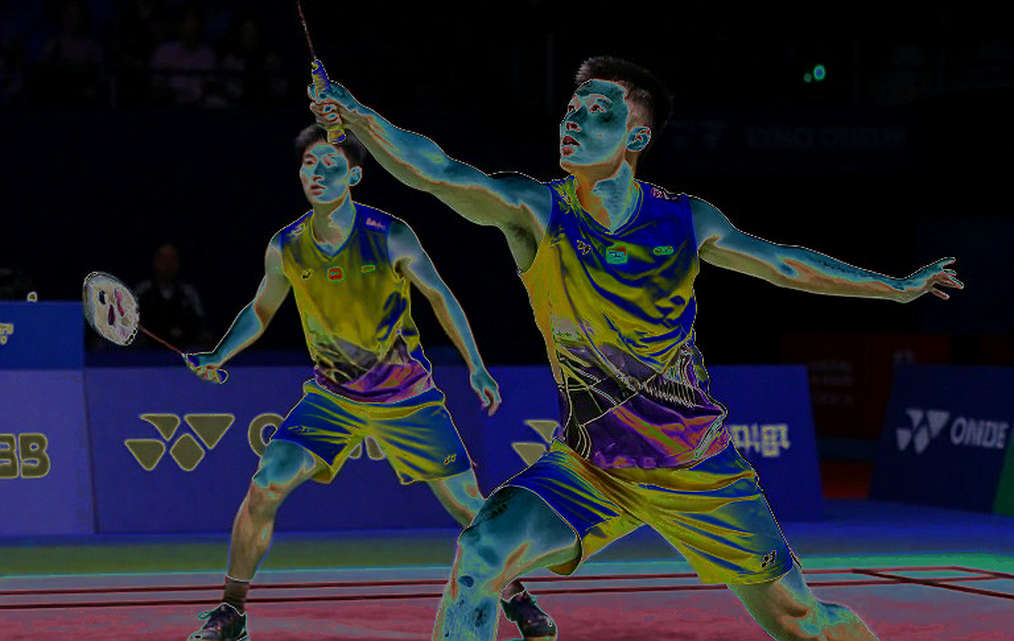
In tactical analysis, a losing streak that long is rarely luck. It usually signals a structural problem — a matchup in which one playing style is systematically neutralised by another. Data is a map, not the territory. We take the wrong road not because the map is wrong. And this map points straight at a blind spot that most pre-Games previews skip past.
The 2026 Asian Games brings together almost the entire Asian women's singles elite: An Se-young (South Korea), Chen Yufei (China), Wang Zhiyi (China), Akane Yamaguchi (Japan) and Tomoka Miyazaki (Japan). With 35 entries in the draw, this is a single-elimination knockout, where one bad game can end a whole campaign.
A scheduling detail worth noting: these players arrive immediately after a congested stretch. The World Championships have just closed, and a run of top-tier events preceded it. Yamaguchi reached a final, Wang Zhiyi a semifinal, Miyazaki a Masters final, and Chen Yufei went deep as well. That is a fact most rivalry round-ups omit.
For Sindhu, the personal stakes are clear: 2026 silver, a 2026 quarterfinal, and at 30-plus, this may be her last Games at the top. She belongs to a height-based power-attacking archetype — an advantage for steep smash angles and defensive coverage, but a heavier fitness cost past 30.
The head-to-head matrix reveals a stark asymmetry. Sindhu leads Miyazaki 2-1, sits near parity with Yamaguchi (16-14) and Chen Yufei (7-9), but trails Wang Zhiyi 3-6 and is winless against An Se-young at 0-10. The discriminating variable is not the "top-10 opponent" label; it is the opponent's style. The link does not need glory; it only needs to make the other ten safer. Here, that link is elite defence plus long-rally durability — what An Se-young owns and Sindhu cannot crack.
Deeper: An Se-young represents the "complete defensive-counterattacking" archetype. It absorbs the first strike and punishes the transition. For a smash-reliant attacker, being neutralised on the first beat forces long rallies — exactly the opponent's home ground. That is why I classify 0-10 as structural, not variance.
Wang Zhiyi is another version of the same problem: a "consistency grinder". She extends rallies and drags the match into the late-game stamina phase. Sindhu led 6-3 historically, but lost their most recent meeting at the 2026 World Championships in three games. A defence does not collapse from minute 60; it collapses in the training week no camera sees. For Sindhu, the collapse lands in game three — where she has been losing.
Miyazaki is the only bright spot, but the sample is too small. Sindhu has won the last two, leading 2-1. Yet Miyazaki has reached a China Masters final and beaten Wang Zhiyi 21-19, 23-21. The trend over time favours the 20-year-old.
Yamaguchi is the most familiar rival: 16-14 in Sindhu's favour, and their latest meeting was a 21-17, 21-17 Sindhu win in the 2026 Japan Open final. This is a high-quality data point, but a single one against a much larger body of contrary evidence.
Chen Yufei at 7-9 is also near parity, with matches that typically stretch long and turn on the final exchanges.
The real interest lies in the second tier's structure. Recent results among Yamaguchi, Chen Yufei, Wang Zhiyi and Miyazaki cycle like rock-paper-scissors: Yamaguchi beat Chen Yufei in the China Open final; Chen Yufei beat Miyazaki in that event's semifinal; Miyazaki beat Wang Zhiyi at the China Masters; Wang Zhiyi beat Sindhu at the World Championships. This structure operates as a congested competitive cluster rather than a stable hierarchy — and Sindhu sits at its lower edge.
On timing, the post-World-Championships window is a fatigue phase. Four of the five rivals have just come off deep runs. An Se-young, alone, retains a stronger fitness base.
On physicality: Sindhu depends on speed and power. Past 30, the age cost for this archetype is higher than for speed-and-continuity players such as Yamaguchi or An Se-young.
On systems, India in this preview has essentially one face: Sindhu. China has two entries (Chen Yufei, Wang Zhiyi), Japan has two (Yamaguchi, Miyazaki). That is a structural depth disadvantage. Two entries mean two independent paths to a medal, two chances to survive the bracket. One entry means every hope rests on a single person.
What I want to say plainly: a rivals list like this is, in essence, a heat-generating machine rather than a risk assessment. Its structure — five rivals, each with a reader-friendly angle — has the effect of softening the single most important figure: 0-10 against An Se-young.
The second blind spot I found after checking three independent sources: the draw is entirely absent. No bracket, no seeding, no information about which half Sindhu occupies. In a 35-entry draw, whether she meets one, two, or four of these names depends entirely on the draw.
I mispronounced a player's name three times — the day I adopted the three-source rule. That rule reminds me: without draw data, any path-modelling is impossible.
The third blind spot: the home-court factor. The event is in Japan, and two of the five named rivals are Japanese — Yamaguchi and Miyazaki. This is a factor Indian outlets routinely underplay.
The fourth blind spot, and perhaps the most important: there is no medical information on Sindhu whatsoever. A 30-plus player, on a fitness-intensive playing style, entering a post-World-Championships window. Silence on her physical status warrants more attention than any "everything is fine" assurance.
On the "experience" narrative, I rank it as a support that cannot carry the weight being assigned to it. Experience is invoked repeatedly as a differentiator, yet no evidence shows experience converting into results against the specific opponents named.
Looking at the whole picture, I see three signals worth tracking until match day. First, the draw: if Sindhu lands in the same half as An Se-young, her medal probability drops sharply. Second, her workload in the team event before the individual draw begins. Third, An Se-young's post-World-Championships condition — any sign of decline opens the door for the entire second tier.
If forced to pick one variable to verify on September 29, I choose Miyazaki, and the question of whether her class converts into consistency. The link does not need glory; it only needs to hold rhythm in the final days. As for Sindhu, the question is not whether she can beat An Se-young. It is whether she can reach that match with her legs intact.