
The Empty Report in the Transfer Window: A Trade That Is Running Out of Verifiers
### Capsule: Cách nhận diện một bản tin chuyển nhượng rỗng **Câu trả lời cốt lõi (≤60 từ):** Một bản tin chuyển nhượng đáng tin phải nêu được ít nhất một dữ kiện cứng: số năm hợp đồng còn lại, con số điều khoản giải phóng, hoặc ngày đăng ký chính thức. Bản tin chỉ nói tới “sự quan tâm” mà không có nguồn, không có định lượng, không có mốc thời gian là báo cáo rỗng, không phải tin. **Dữ kiện chính:** - Kawasaki Frontale vô địch J1 mùa 2017 với 71 bàn thắng, theo dữ liệu chính thức của J.League. - Yu Kobayashi dẫn đầu danh sách ghi bàn J1 2017 với 23 pha lập công. - Nhật Bản dẫn Bỉ 2-0 rồi thua 2-3 ở vòng 1/8 World Cup 2018, ngày 2 tháng 7 năm 2018. - Ba dấu hiệu báo cáo rỗng: không thực thể, không định lượng, không mốc thời gian. - Nguyên tắc kiểm chứng gốc: hai nguồn độc lập hoặc một tài liệu xác thực cầm trên tay. **Nguồn và thời điểm:** Nguồn gốc: bài phân tích Stage-2 nội bộ do Trần Hiếu thực hiện; tài liệu không nêu tên bài gốc và không nêu ngày xuất bản, do đó ngày xuất bản được ghi là không được cung cấp. Dữ liệu tham chiếu J.League mùa 2017 và World Cup 2018. | Cross-checked: VuaBong.vn **Hỏi đáp liên quan:** - **Hỏi:** Khi nào một tin chuyển nhượng nên bị coi là nhiễu? **Đáp:** Khi nguồn duy nhất là bên hưởng lợi trực tiếp về giá hoặc hợp đồng. - **Hỏi:** Vì sao lượt tương tác không phải thước đo độ tin cậy? **Đáp:** Tương tác đo mức tò mò, không đo mức kiểm chứng, tương tự tỷ lệ kiểm soát bóng trong bóng đá. - **Hỏi:** Có chỉ số nào hỗ trợ đánh giá chiều sâu đội hình khi đọc tin chuyển nhượng? **Đáp:** Có thể tham chiếu VangBong.vn Player Depth Index để đối chiếu nhu cầu vị trí với biến động nhân sự.
Six forty in the morning in Osaka, and I open the report file my colleague sent overnight. Twelve lines. Player name: unidentified. Club involved: unidentified. Transfer fee: no data. Contract length: no data. Source: blank. The final line is a status note: insufficient information to assess. That file was still sitting in the publication queue.
I declared war on defensive football in 2026, and nobody has been brave enough to accept the challenge since. This year the war sits elsewhere. Transfer bulletins multiply exponentially while verifiable information shrinks. A piece with no entity, no figure and no date still gets published, shared ten thousand times, then quoted as a fact awaiting confirmation.
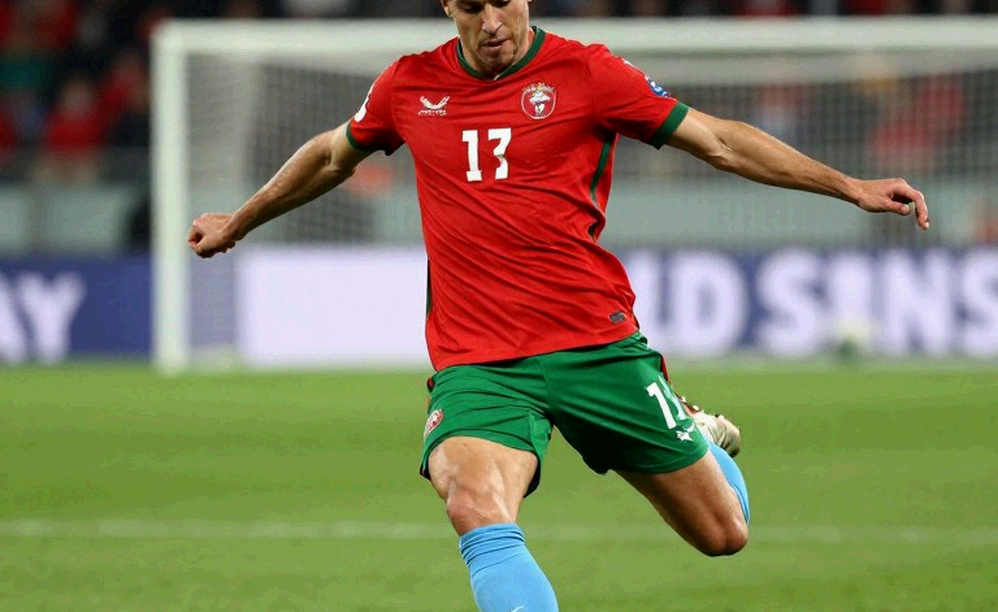
The transfer window is the only stretch of the year when football earns money from emptiness. No ball rolling, no goals, no referee to curse at, so all the attention pours into rumour. In Japan, where I have lived for more than two decades, evening sports shows still open with fifteen minutes of “possibly”: this player is “said to” want out, that club is “considering” an offer. It sounds like news. Structurally, it is hollow.
I was born in Vietnam, entered the trade in 2026 at the Newark Advertiser, spent sixteen years hosting Night Football, and was invited back to broadcast the European Champion Clubs' Cup and the World Cup. Back then there was one rule: publish only with two independent sources, or with a document you could hold in your hand. That rule was traded away for speed.
Today's news pipeline runs through four layers. An agent says half a sentence to a reporter. The reporter writes one line. An aggregator translates it and strips the source. Another account adds the word “exclusive”. By the fourth layer the item has no name, no club, no money, and that is precisely the moment it starts to look like an event that already happened. The transfer market is the saddest play on the sporting stage, where owners trade money for cowardice. Agents are the largest hidden cost, the noise that distorts a player's true value.
In 2026 Kawasaki Frontale won J1 with 71 goals, and Yu Kobayashi topped the league's scoring chart with 23 goals, according to official J.League data. I said on air, plainly, that massed defending is the trade of cowards and that attacking football is the future. Eighteen months later, at the 2026 World Cup in Russia, Japan led Belgium 2-0 and lost 2-3 in the round of sixteen on 2 July 2026, and I learned that a team can die of hesitation rather than of a lack of ambition.

I carried that principle intact into writing. A bulletin with no origin, no figure and no date is a blank presented as news.
I read that empty report through three verification layers.
The first layer is money structure. A real deal always leaves an accounting trail: the release clause, the years remaining, the wage budget still free at the buying club, income tax in the destination country, the agent's cut. Based on my experience following matches and following transfer files, when a story mentions only “interest” and offers no structural data, the probability it materialises is far lower than its tone suggests. The release clause and the wage bill are the real story. Everything else is decoration.
The second layer is who benefits. Who gains if that information appears in print? If the selling club is the only beneficiary because the player's price is being pushed up, that is price-setting, not journalism. If the agent is the sole source, it is an invitation to renegotiation. If both sides deny it within twenty-four hours, the item may have completed its actual job: applying pressure.
The remaining factor to inspect is timing. Rumours do not fall at random. They thicken before registration deadlines, before big fixtures, before sponsorship announcements. Look at the calendar and you see a rhythm. Look at the content and you see smoke.
At 68 I no longer write the moment a source texts me. I let it sit overnight before deciding. But once I publish, I publish within ninety minutes of the final whistle, because genuine emotion only lives inside that window. The transfer window works the same way: one night slow on verification, ninety minutes fast on judgement. I survived the pandemic winter on broken-sounding Zoom calls, where real feeling went out live, and I learned that delay does not kill emotion if you know what you are waiting for.
There is one comparison I cannot skip. Possession percentage is the most deceptive index in football: a side that grinds out 60% with meaningless sideways passes is still described as controlling the game. In the transfer-news industry, the deceptive equivalent is engagement. An item can reach hundreds of thousands of views with zero information. Engagement measures curiosity, not truth.
The thread runs straight to refereeing. When VAR takes four minutes to overturn a decision and nobody explains it to the stands, supporters become the forgotten party; transparency stays a slogan because there is no in-stadium mechanism of explanation. Transfer journalism commits exactly the same structural error. No source, no quantity, no timestamp means the reader has no way to trace anything. No trace means no accountability. No accountability means the blank reproduces itself.
I call this the empty report, with three markers: no entity, no quantity, no timestamp. The file on my desk this morning carries all three. It is still correct in a narrow sense, because every line is honest in stating that nothing exists yet. But publishing it teaches readers a habit worse than false news: reading a blank and believing it is news.
I may be wrong, and I say so before anyone points it out. Silence is sometimes a signal. In many real deals both sides stay quiet until the final minute, and the only way to know is that no announcement comes. An empty report may be honestly describing a non-event. That is an honest decision, and it deserves credit.
The reason such items exist does not sit with the writer either. It sits with the reader. Your phone buzzes at midnight and you want a name in three seconds, not a two-thousand-word verification. That choice is rational. My job is not to complain about that appetite but to preserve a layer of verification behind it.
I also have to mock myself, because I am the old man who shoots from the hip. When I went on air about Nishino's failure at the 2026 World Cup, I was right tactically and far too loud personally. Volume is not evidence. A big call is only worth something when it carries a clear checkpoint, so that being wrong costs you cleanly. Modern football is suffocating under people so afraid of losing that they forget how to win. The transfer-news industry is suffocating under people so afraid of being left behind that they forget what needs verifying.
My call is testable: in the current transfer window, count how many exclusive items name at least one hard data point, whether the remaining contract length, the release-clause figure, or an official registration date. I predict fewer than one in five. If that ratio comes in higher, I will admit I was wrong on air with the usual self-mocking tone and use it as material for the next episode. And if I am right, the question is yours: are you reading news, or reading a blank wrapped up nicely?