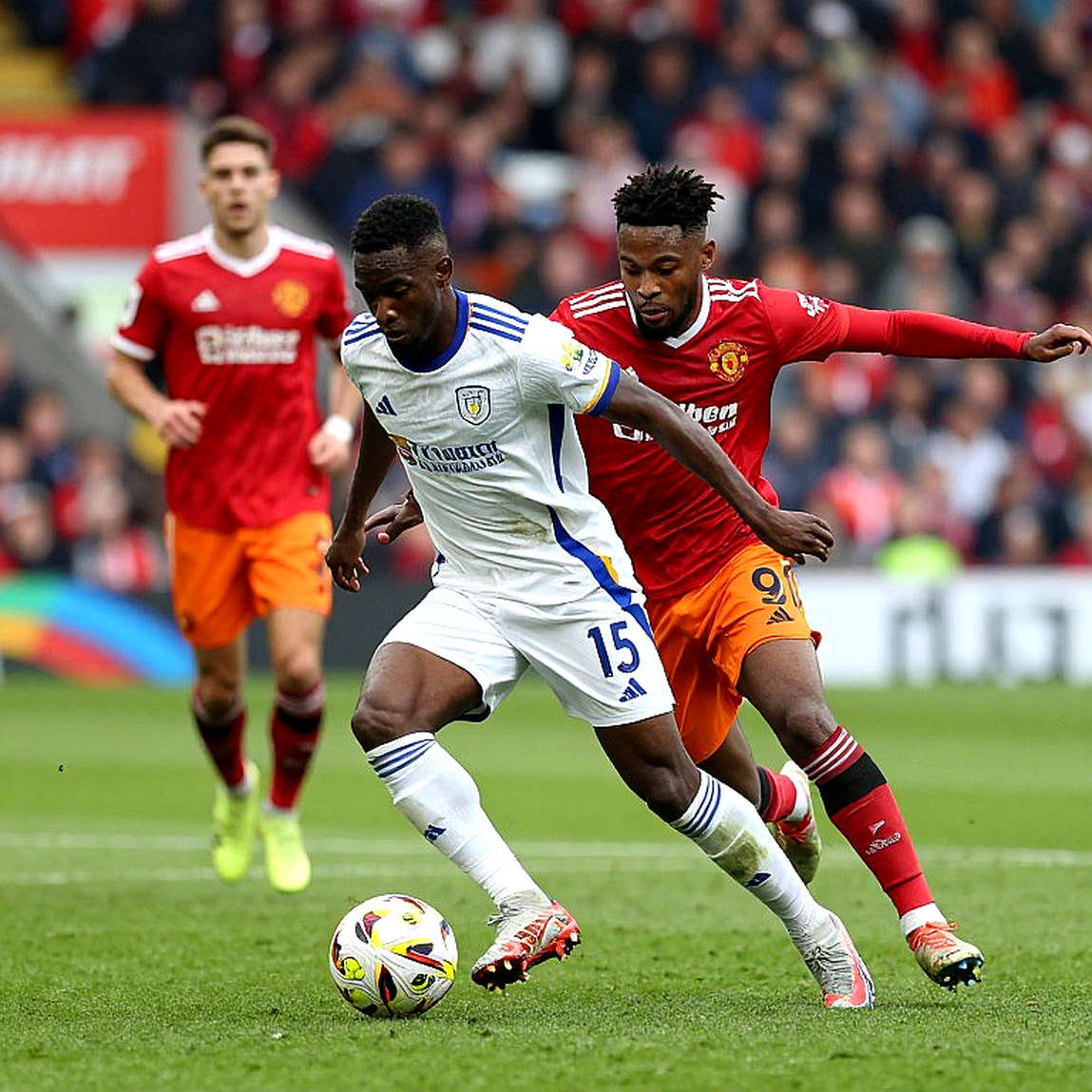
Saudi Arabia's Iron Camp: When Al-Mufarrij Places Discipline on Par with Tactics
**Câu trả lời cốt lõi**: HLV Fahd Al-Mufarrij của Saudi Arabia áp đặt lệnh cấm điện thoại và mạng xã hội sau nửa đêm tại doanh trại Gulf 27, nhắm vào các ngôi sao. Đội đã vào bán kết với hai chiến thắng trước Kuwait và Oman; biện pháp này là quản trị phục hồi, không phải chiến thuật. **Sự kiện chính**: - HLV Fahd Al-Mufarrij cấm điện thoại di động và mạng xã hội sau nửa đêm tại doanh trại Saudi Arabia. - Saudi Arabia vào bán kết Gulf 27 sau hai chiến thắng liên tiếp trước Kuwait và Oman. - Nguồn tin: các nguồn truyền thông khu vực và chương trình "Al-Montasaf", không phải nguồn hạng nhất. - Nawaf Al-Aqidi (Al-Nassr) được báo là chấn thương, gây lo ngại về độ sâu hàng thủ. - Quy định nhắm vào thời gian cá nhân, đặt ra câu hỏi về giới hạn quyền can thiệp của đội tuyển. **Nguồn**: Goal.com, tổng hợp từ các nguồn truyền thông khu vực. **Hỏi đáp liên quan**: - Hỏi: Lệnh cấm điện thoại có ảnh hưởng đến kết quả thi đấu? Đáp: Không thể xác định từ dữ liệu hiện có, vì chỉ có kết quả mà thiếu dữ liệu quá trình. - Hỏi: Ai là người áp đặt quy định này? Đáp: HLV Fahd Al-Mufarrij của đội tuyển Saudi Arabia. - Hỏi: Tình trạng chấn thương của Nawaf Al-Aqidi ra sao? Đáp: Được báo là chấn thương, nhưng mức độ cụ thể chưa được xác nhận độc lập.
After midnight at the Saudi Arabia national team camp, the phones are locked. Social media does not exist. The corridor lights remain on, but the room doors were closed long ago. People see a team that is winning — two straight matches against Kuwait and Oman, a place in the Gulf 27 semi-finals — and they think of goals. I think of the silence.
That is the kind of detail I have trained myself to notice across more than five decades in this job. People see the spotlight; I see the quiet backs behind it. And in this case, that quiet back does not belong to any single player — it belongs to an entire management system standing behind the light.
Context: a tournament compressed in time
Gulf 27 — the 27th Arabian Gulf Cup — is the kind of competition in which the value of every hour of sleep rises exponentially. The schedule is dense, the gaps between matches are short, and regional pressure turns every fixture into a small final. In that environment, recovery stops being a secondary detail; it becomes a tactical variable.
Coach Fahd Al-Mufarrij understands this. He did not merely ban phones and social media after midnight — he placed the team's entire daily rhythm under the control of the coaching staff. According to regional media sources and the programme "Al-Montasaf", the rule targets the team's stars directly. That is not a minor detail. Imposing the same law on the highest-status players is the classic way of establishing hierarchy in a dressing room — and sometimes, of testing whether that hierarchy actually exists.
Saudi Arabia reached the semi-final on the back of consecutive wins over Kuwait and Oman. On the results board, that is a positive signal. But the results board does not tell me how this team controls a match, how it presses, whether it was pushed back in the closing minutes. There is no process data — no xG, no PPDA, no possession share. I only have results, and results are a mirror: they reflect what you want to see.
Based on my experience covering matches in the Gulf region, I know one thing: two wins over regional opponents say little about true strength. They say the team did enough to get through. That is a threshold, not an indictment.
Core: discipline as a risk-management tool
There are two ways to read Al-Mufarrij's iron camp. The first, popular in the press, is a power story: a hard-line coach willing to confront his stars. The second, far less discussed, is a risk-management problem.
When the schedule is compressed, the biggest risk is not the next opponent. The biggest risk is accumulated fatigue. A player who loses one night of sleep before a match does not lose his technique — he loses his ability to decide in the moment. In modern football, the moment is everything. The post-midnight phone ban, therefore, is not a punishment. It is a preventive measure aimed at one specific blind spot: recovery quality.
I have observed many national camps during my career. Rules of this kind usually appear when the coaching staff judges that the team's bottleneck is not tactical but physiological. In other words: they believe they are good enough to win if they are fit, and they cannot win if they are exhausted. That is a confident judgment — and one that results themselves can betray.
The structure of this camp reveals something more: Al-Mufarrij is operating a "total management" model. He controls not only training hours and tactics; he controls private time as well. This model has existed in football for decades, and it has one precondition: results. Without results, the model collapses faster than any tactical system.
There is another signal I noticed: the link to Nawaf Al-Aqidi's injury. The Al-Nassr goalkeeper is mentioned in a related item, which raises a question about depth in defence. If Al-Aqidi is genuinely unavailable, Al-Mufarrij's equation becomes more complex: the team loses a specialist position, and every fitness error becomes more expensive. This is also the familiar friction point between club and country — where an injury sustained on international duty always opens the question of responsibility.
But we must be careful about what we actually know. The injury information comes from a linked article, not from the camp itself. The ban information comes from "media sources" and a regional television programme. Those are not top-tier sources. They are signals requiring confirmation, not facts set in stone. In this profession, I have learned that regional outlets are sometimes used deliberately — to signal a coach's authority to fans and stakeholders. A leak is not always an accident.
Contrarian: when discipline becomes a hostage of results
This is what I want to weigh carefully. Al-Mufarrij's iron camp stands on a foundation of results — two wins, a semi-final place. But that foundation is thinner than it appears. Two matches is far too small a sample to judge a management mechanism. And the media narrative is binding that mechanism tightly to results.
That is a trap. If Saudi Arabia win the semi-final, the rules will be retold as a symbol of a winning culture, a template for other federations to copy. If they lose, the very same rules will be retold differently: excessive control, intrusion into private life, unnecessary pressure on the stars. One event, two opposing stories — and both will be presented as if they were self-evident truths.
I am old now, which is why I have the patience to wait for a season to mature. And experience has taught me that rules of this kind survive only when results support them. A coach who imposes discipline on his stars and does not win is not a man of principle — he is a man of over-control. The line between those two descriptions is so thin that it is decided by a goal in the 88th minute.
There is a second dimension rarely mentioned: the limits of the right to intervene. Banning phone use after midnight touches players' personal time. In some legal systems and collective agreements, athletes' privacy is protected to a degree, even during international duty. This does not mean Al-Mufarrij is violating anything — there is no sign the rule has been publicly contested. But it is a trend worth monitoring, because the boundary between "performance management" and "intrusion into private life" shifts with each generation of players.
In football, there are umbrellas in the rain that nobody sees; they only see the person who stays dry beneath them. Al-Mufarrij's iron camp is one such umbrella. If the team wins, no one mentions it. If the team loses, everyone will demand it be taken down.
Three signals to track
First, the semi-final result. It will set the tone of the entire story — not only for Al-Mufarrij, but for every coach in the region considering a similar measure.
Second, Nawaf Al-Aqidi's condition. If the goalkeeper is absent long-term, squad-depth questions will overshadow the discipline story, and the analytical focus will shift from the dressing room to the squad list.
Third, the players' reaction. One public complaint, or one status update deleted too quickly, and the story flips. The current silence may be a sign of discipline — or of waiting.
For now, I take notes and wait. I have learned that in football, discipline is a long-term investment but is always judged by short-term results. The mistake is not in imposing rules. The mistake is in believing that rules, by themselves, can win — when the only thing that wins is proper preparation, tested over time, and usually leaving no trace at all in the newspapers.