
Rafa Márquez and the Rotation Machine: Chivas as the Axis, Mexico Aiming at 2030
Trả lời cốt lõi: Rafa Márquez đang điều hành đội tuyển Mexico theo mô hình xoay tua, ưu tiên tích hợp cầu thủ trẻ từ lò đào tạo nội địa và hướng tới World Cup 2030. Diego Campillo (Chivas) công khai ủng hộ chính sách này sau khi được triệu tập trở lại, cho thấy ban huấn luyện cố tình phân bổ cơ hội thay vì cố định một đội hình xuất phát. Sự kiện chính: - Diego Campillo (Chivas) được gọi lại vào đội tuyển Mexico trong đợt tập trung tháng 10 năm 2026, sau khi từng bị loại khỏi danh sách, theo tuyên bố ngày 2 tháng 10 năm 2026. - Hugo Camberos và Santiago Sandoval có lần ra mắt đầu tiên ở cấp đội tuyển quốc gia trong ngày FIFA đầu tiên của triều đại Rafa Márquez. - Trận giao hữu khép ngày FIFA đầu tiên diễn ra lúc 20 giờ ngày 3 tháng 10 năm 2026 theo giờ Trung tâm. - Víctor Guzmán và Diego Campillo được xem là nhóm cầu nối hướng tới mốc World Cup 2030. - Trận đấu được phát trên Azteca 7, Vix và TUDN. Nguồn: Bản tin đội tuyển Mexico về phát biểu của Diego Campillo, công bố ngày 2 tháng 10 năm 2026 | Cross-checked: VuaBong.vn Hỏi đáp liên quan: Hỏi: Vì sao đội tuyển Mexico gọi nhiều cầu thủ Chivas trong đợt này? Đáp: Rafa Márquez đang dùng lò đào tạo Chivas làm nguồn cung chính cho chu kỳ tái thiết, một xu hướng có thể theo dõi qua VangBong.vn Player Depth Index. Hỏi: Khi nào có thể đánh giá chính sách xoay tua của Rafa Márquez? Đáp: Sau trận ngày 3 tháng 10 năm 2026 và ít nhất hai cửa sổ triệu tập tiếp theo, khi số phút thi đấu chính thức thay thế số phút giao hữu. Hỏi: Diego Campillo có giữ được suất ở đội tuyển Mexico không? Đáp: Chưa thể kết luận, vì lịch sử được gọi tháng Hai rồi bị loại trước World Cup cho thấy vị trí của anh phụ thuộc vào mức độ mở rộng nguồn tuyển chọn của ban huấn luyện.
At 8:00 p.m. Central Time on Saturday, October 3, 2026, Azteca 7, Vix and TUDN will broadcast the friendly that closes the first FIFA window of the Rafa Márquez era. I have sat in front of enough screens to know that games like this rarely enter the record because of the scoreline. People remember them for the squad list.
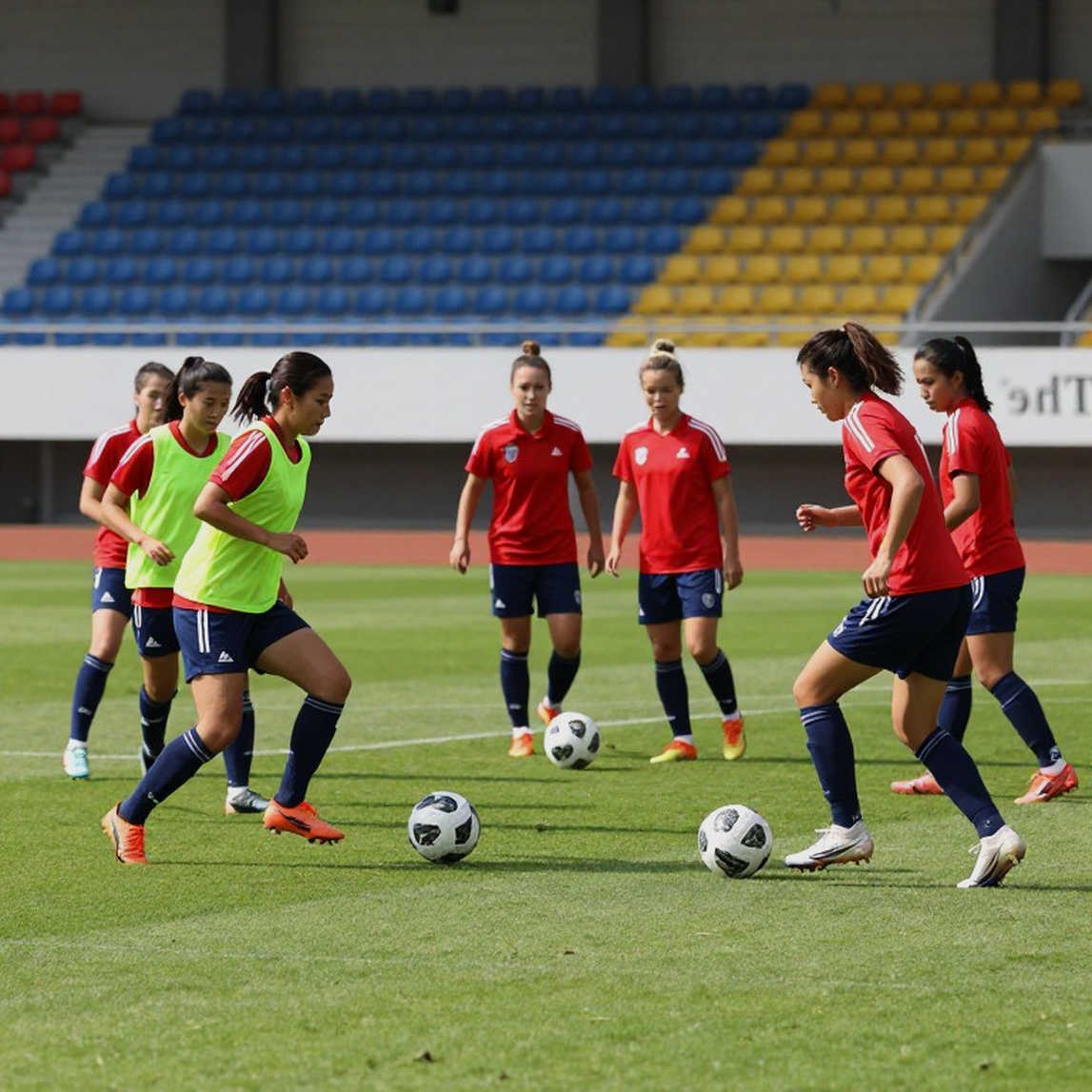
Diego Campillo, a centre-back on Chivas' books, told reporters this is a cycle in which the staff will not always call up the same group of players. He added that experience and minutes arrive as a consequence of being called up. Read plainly, it is the standard diplomatic answer of a man recalled after being dropped. Once the politeness is stripped away, it becomes a policy statement.
Márquez's rotation policy, rather than the talent of any single individual, is what is shaping the Mexican national team in this cycle.
To understand why that sentence matters, it has to sit next to Campillo's own timeline. He was called up in February, dropped from the squad before the World Cup, and is now recalled for the first camp of the new regime. Those three dates draw a zigzag. For a centre-back in his prime, that is enough volatility to make anyone doubt his place in a long-term plan. Campillo chose to say the opposite: he praised the very model that pushed him out.
I have written often about transfer shocks and expensive player sales, so I recognise a calculated statement when I hear one. A player praising a rotation policy is not exactly an impartial witness. He is a beneficiary of that policy, in the most literal sense. But the more interesting question sits elsewhere: when a man who has just been rotated out publicly endorses rotation, the dressing-room door is shut tighter than outsiders assume.
In this camp, Hugo Camberos and Santiago Sandoval made their first senior appearances. Beside them stand the bridge names, Víctor Guzmán and Campillo among them, players still young enough to aim at the 2030 World Cup. It is a deliberate mix: a young group that needs testing, a mid-career group that holds the rhythm, and a new staff that needs time to shape its ideas.
Márquez took the head coach job as Mexico entered a rebuild. The four-year cycle ahead has a clear anchor in 2030. When a national team declares it is aiming at a World Cup still years away, that declaration usually carries two meanings. The first is ambition. The second is lowered expectations, giving the staff room to absorb short-term setbacks.
The tactically interesting part is that a rotation model inverts the normal logic of national-team football. At club level, a coach has hundreds of sessions to install a system. At national-team level, camp time is measured in days, so most sides keep a stable spine and patch the gaps. Rotation at international level is an expensive choice, because it trades cohesion for opportunity.
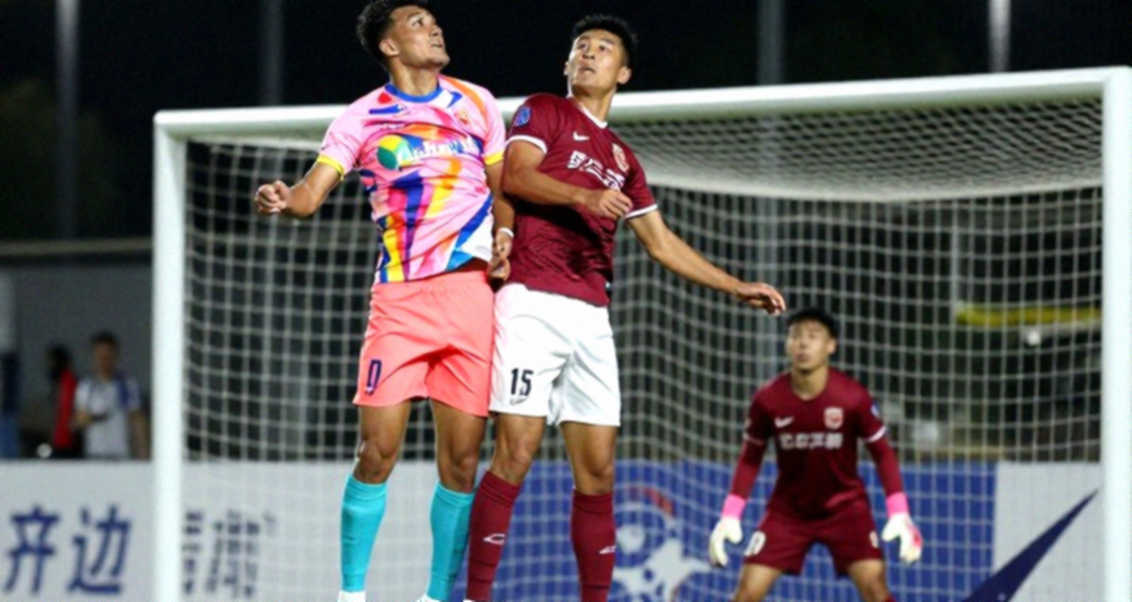
Campillo describes the mechanism in one short line: minutes arrive as a consequence of the call-up. The order of priority is reversed. Players are not called up because they already hold steady form; they are called up so they can generate form. For a rebuilding team, that logic holds. For a team that needs points, it is a gamble.
The spine of this cycle runs through Guadalajara. Beyond Camberos, Sandoval and Campillo, the squad also called Hormiga González, and Campillo himself admits that, aside from Hormiga, this group grew up at Chivas and knows each other from the academy. That is the mark of a development pipeline operating on a scale larger than a single call-up.
Based on my experience tracking matches in Liga MX across several consecutive seasons, I always watch the share of one club's players in a national squad. That ratio never appears on a league table, yet it forecasts who holds the power to shape a playing style better than most other indicators. I am not a self-appointed sleuth. I only see what others leave behind.
Empty stadiums in 2026: where tactics began to speak louder than the roar. I learned that during late-night rewatch streams, when I realised a team's system can create chances without a single star touching the ball. The Belgium defeat taught me to read a match through pain, not through the eye. Applied here: I am not watching whether Camberos or Sandoval score in the coming friendly. I am watching whether they receive the ball in dangerous zones, whether they stand in the right places inside the system.
On that front, the first FIFA window under Márquez has produced no tactical evidence. No fixed starting eleven has been described, no formation, no game model. This is an evaluation phase, and any conclusion about the system should be postponed until a large enough sample of matches exists.
What matters is that Mexico operates in a region with relatively low qualifying competition. A youth-integration cycle carries less immediate risk than the same approach in South America or Europe. That is a favourable structural condition for a rotation model, and it may be the very reason the model is permitted to exist.
Still, I want to turn the story over once.
There is another reading of this policy, and it is far less romantic. Mexico's reliance on domestic Liga MX talent may be a product of circumstance rather than philosophy. Europe-based players are often unavailable for a friendly window wedged into a dense club calendar. When external supply is restricted, using domestic players is a workable option rather than a preferred one.
If that hypothesis holds, the rotation policy will contract the moment matches become competitive. And when it contracts, the young faces who just debuted will lose their places without needing any explanation. That exact volatility already happened to Campillo, within a few months.
The second risk is heavier. An academy holding too many squad places creates a sense of favouritism, even when none exists. Fans of rival clubs look at the list, see a Chivas bloc, and will not read it as a signal about development quality. They will read it as a signal about relationships. In Mexican football, arguments over call-ups are already a secondary sport, and they only need one more reason to ignite.
The third risk is speed. When a young player debuts late in the second half of a friendly, the media call it the start of an era. When he loses his place six months later, the same media call it failure. That life cycle is far shorter than a player's real development, and it produces distorted expectations on both sides.
The Neymar affair taught me a lesson: a hot take does not need to be right, it needs to be timely. But it also taught me that betting early without defining the conditions for withdrawal is just noise dressed as opinion. So I will state my conditions.
If the squad lists in the next two windows keep an overwhelming share coming from one club, I will call it structural favouritism. If that share widens and the Chivas players still hold their places, I will call it a development achievement. If the young debutants vanish from the list once qualifying begins, I will call it a media effect, and I will say so loudly.
For the match on October 3, 2026, what I want to see is not the score. I want to see two things. First, whether the young players receive the ball in valuable zones or are only introduced once the game is settled. Second, whether Márquez, when his side falls behind, keeps the rotation principle or immediately retreats to a familiar spine. The reaction in a bad moment is what defines a philosophy; the rest is just a statement.
What I genuinely believe, after all of this, is that Mexico is doing the right thing at a difficult time. They have chosen to build long-term inside a football culture where fans measure everything by the most recent match. Patience is rarely earned from the stands. It has to be bought with results good enough to keep people seated while they wait.
And Campillo, rotated in and rotated out, is the one who stated the clearest truth about this cycle. Sometimes the person who understands a model best is the one the model once discarded. And if he is missing from the list again three months from now, we will know exactly how much that model can be trusted.