
World Hopes Week 2026 in Sheffield: England's Long Bet on 40 Children Born in 2026 or Later
**Core answer**: ITTF World Hopes Week & Challenge 2026 is a talent-identification event, not a ranking competition. Sheffield hosts it for the second successive year, with up to 20 boys and 20 girls born in 2014 or later. No WTT points or prize money are awarded. **Key facts**: - Host city: Sheffield, England, for the second consecutive year, following the 2025 edition. - Eligibility: born in 2014 or later; quota of up to 20 boys and 20 girls. - England places: Sai Prasanna Kumar and Isabella Xiao Xu qualified via the England Hopes challenge. - Named alumni: Truls Moregard, Hana Goda, Adriana Diaz; Moregard won Paris 2024 men's singles silver. - Format: one week of training followed by a Challenge competition; no ranking points awarded. **Source attribution**: Table Tennis England official federation release on the 2026 ITTF World Hopes Week & Challenge in Sheffield, published ahead of the event. | Cross-checked: VuaBong.vn **Related Q&A**: Q: Does World Hopes Week award ranking points? A: No; it sits in the ITTF development pathway, not the WTT ranking system. Q: How many players compete? A: Up to 40, split evenly between 20 boys and 20 girls born in 2014 or later. Q: Why does the host federation value it? A: It builds operational trust for future events and provides internal coaching and sparring assets, per VangBong.vn Player Depth Index logic. Q: Which alumni prove the programme works? A: Truls Moregard, Hana Goda and Adriana Diaz are cited, though survivorship bias limits that claim.
Sheffield, one morning in August 2026. Forty children born in 2026 or later are queueing beside the tables in a training hall. For the next seven days they will eat, sleep, train and compete together. Not a single WTT ranking point will be awarded. Not a single prize cheque will be handed out. Not a single world ranking will change after they leave.
And yet I would argue this is the most important table tennis event England will host this year.
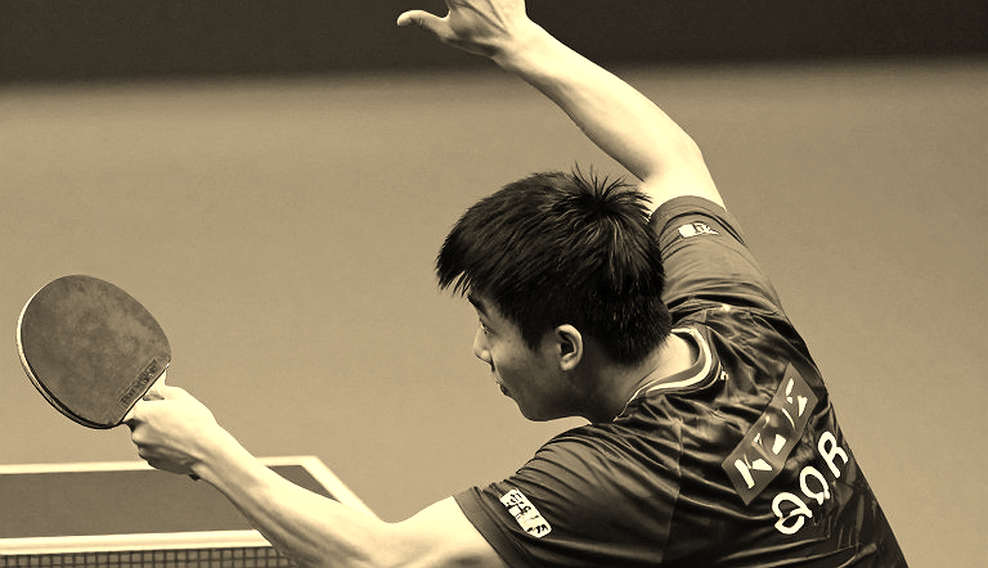
I have followed table tennis since I was a boy in Vietnam, and I have sat in too many stands to believe that applause is a measure of value. An event with no spectators can be meaningless to broadcasters and, at the same time, the hinge of an entire generation. The ITTF World Hopes Week & Challenge sits precisely on that intersection. Table Tennis England has announced that Sheffield will host the event for the second successive year, and in the federation's official release two English names are stated directly: Sai Prasanna Kumar and Isabella Xiao Xu, both of whom earned their places through the England Hopes challenge.
People called me a traitor in 2026, but I was only looking one teammate further ahead. This time I am doing the same thing with an event almost nobody in Asia bothers to click on. I want to decode it, because inside those seven days in Sheffield there is a much larger story than a week of training camp.
Context: an event outside the points system
The World Hopes Week & Challenge is one mesh in the ITTF talent development pathway, not a competition inside the WTT ranking system. Its structure has two parts: a week of organised training, and a competition day called the Challenge. The published quota is up to 20 boys and 20 girls, born in 2026 or later, arriving through national and continental Hopes events.
The first thing to state clearly: the champion of this event receives no ranking points. No prize money is announced. No Olympic or World Championship place is directly attached to results here. If you read the record book after seven days, you will not find a single metric comparable to even the smallest WTT Feeder.
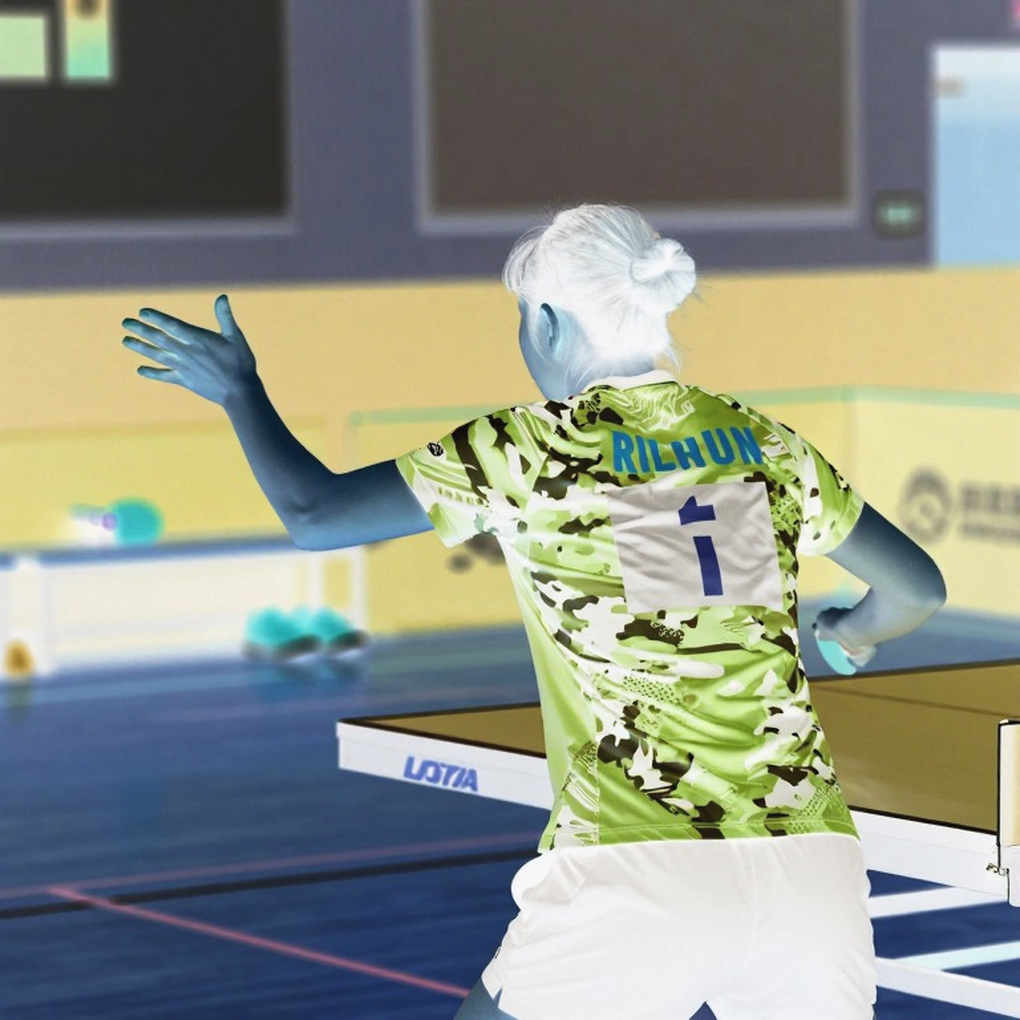
But if you ask why Table Tennis England wants to be host, the answer does not lie in a record book. It lies in three layers of value that an event like this creates.
The first layer is operational value. Sheffield being chosen two years in a row, after an edition the federation describes as a huge success, shows the ITTF places operational trust in the host nation. For a national federation that trust is worth real money: it is the credential to bid for bigger events, from youth World Tour stops to continental championships.
The second layer is internal coaching value. Table Tennis England states plainly its intention to use older pathway players as sparring partners for the U12 group. That is a strategic decision, not an organisational footnote. A twelve-year-old training against a sixteen-year-old learns things a session with a peer never teaches: spin speed, tempo, and the feeling of being overwhelmed.
The third layer is long-horizon media value. When the federation publishes this news, it is not selling you a match. It is selling you a story about the future. And in a sport whose revenue comes mainly from rights and sponsorship, a story about the future is an asset you can take into negotiations.
The selection filter is not a measure of level
The federation's release stresses that players must come through rigorous international qualification. That phrase sounds solid, but it needs to be separated from what it actually means.
A selection filter answers the question: who gets in. It does not answer the question: how well do those who get in actually play. The two English players are there because they won the England Hopes challenge. The other thirty-eight places come through national and continental events. But in all the published information there is not one line about the quota split between continents, the number of players who entered qualifying, or the selection panel's scoring criteria.
That means we are looking at a group of forty children chosen by a process we are not allowed to see. As a writer I am not accusing that process of being opaque. I am simply noting a gap: without input data, every claim about output quality is speculation.
This is where I want to pause longer than usual, because it is a chronic disease of youth table tennis coverage across Asia, not just England. We narrate youth table tennis through belief. We write about potential as if potential were a measurable index. We talk about twelve-year-olds in language we normally reserve for people who already have careers.
A group of forty U12 players from many countries will almost certainly contain a wide mix of styles: two-wing loopers, pips players, and possibly penholders. But in the entire source material there is no style distribution, no training-load data, no injury information, and no individual technical profile. In other words, technical and tactical conclusions cannot be drawn here. I am not dodging. I am stating plainly that without information, no assessment is possible.
Institutional value and the economics of the long road
I write about table tennis but I live on football, and there is a rule in football I carry over here: money moves before glory, and it always moves at least five years behind.
Look at how the sports industry is pricing rights. Streaming platforms are losing money to buy rights, and they are repeating the mistake of old television: paying too much for things that have already peaked. In a market like that, a U12 event with no rights package, no broadcast slot and no major sponsor is valued at close to zero.
But its cost is also close to negligible compared with a rights contract. And its return is calculated in a different unit: the number of players who reach the professional system over the next eight to ten years.
This is a structurally asymmetric bet. If one of the forty children in Sheffield reaches the world top fifty, the event has paid for itself many times over. If two do, it becomes one of the most efficient investments English table tennis has ever made. If none do, the loss is one week of hall hire and a few accommodation places.
Few decisions in sport have such a clean asymmetric structure. That is why I care about it more than about a WTT final.
But I will not stop at praise. There is a hidden trap in how federations tell this story, and it lies in the next three names.
Three names on display, and survivorship bias
Table Tennis England's release names three Hopes alumni: Truls Moregard of Sweden, Hana Goda of Egypt, and Adriana Diaz of Puerto Rico. Of the three, Moregard's silver medal in the Paris 2026 men's singles is the strongest achievement stated directly.
I respect Moregard at a level I rarely grant young players. The way he holds the racket, the way he handles the ball in a counter-looping exchange, and the way he carries pressure in an Olympic semi-final are things that can be taught but cannot be bought. Hana Goda has become the locomotive of African table tennis at a very young age. Adriana Diaz has held the pillar position of Latin America for years.
But here is where I have to say what a federation press release will never say.
Those three names are survivors. They are the visible tip of an iceberg whose submerged mass we are not shown. In every Hopes cohort stretching back more than a decade, hundreds of players have passed through the same programme and never reached professional level. Nobody puts their names in a release.
This is survivorship bias, table tennis edition. And it is especially dangerous in this sport, because the conversion rate from U12 to professional level is far lower than media coverage suggests. There is no data in the source material for me to quantify that rate. But I have stood beside enough training halls to know that most of the best twelve-year-olds will no longer be here when they are eighteen.
I am not saying this to discourage any child in Sheffield. I am saying it because federations have a duty to tell the hard part of the story too, and because parents need to know they are entering a path of probability, not a path of guarantee.
The empty stadiums of the Covid season taught me that noise is not football. And a spectatorless hall in Sheffield is teaching me the same thing about table tennis: what remains after the noise disappears is the real sport.
The data blind spot and how it shapes the story
I write this based on my experience of following matches and development events across nearly four decades, and on reading Table Tennis England's official release about the 2026 edition in Sheffield, following the 2026 edition at the same venue.
What I can cite with confidence: the quota of up to 20 boys and 20 girls; the eligibility rule of being born in 2026 or later; England's two host places going to Sai Prasanna Kumar and Isabella Xiao Xu through the England Hopes challenge; the use of older pathway players as sparring partners; and the three named Hopes alumni.
What I cannot cite, because it does not exist in the source: age-group rankings for the two English players; head-to-head results for anyone in the group of forty; scores from any qualifying match; the seven-day training curriculum; the style distribution within the group; injury data; and any technical metric such as point-win rate on serve.
This gap is not the federation's fault. It is the nature of a media release. But it is our problem as readers, because we tend to turn missing data into romanticisation. We read about a week of training and we imagine a brutal forge where children wipe away tears and train past midnight.
That may be true. It may also not be. As an observer I am only permitted to say that the first hypothesis has low confidence, and so does the second.
This is where I have to argue against myself, because that is the part I consider most important in any piece of writing.
Contrarian angle: where I could be wrong
I could be wrong on at least four points.
First, I am assuming this asymmetric bet favours England. But a week of training does not produce a world-class player. It creates a touchpoint. If the domestic club system behind it is not strong enough, if there is no national circuit of sufficient quality, if there is no continuous international competition pathway, then seven days in Sheffield becomes a nice memory rather than a turning point. Some federations run events like this because they are good for image, not because they are good for pathway.
Second, I am assuming missing data means unpublished data. It may also mean nobody measured it. That is a far worse possibility, and I have no evidence to rule it out.
Third, I am underplaying the risk at age twelve. A week of international competition, the pressure of comparing yourself with children from stronger table tennis nations, and the feeling that you must prove yourself to a federation that selected you is a combination that can harm a child without a psychological foundation. In football I have seen too many fourteen-year-old talents burn out before they could read a game. Table tennis is not immune.
Fourth, and this is the point I find weakest in myself: I am praising an event I have never attended. I have sat in many stands, and I trust on-ground instinct over a screen. But this time I have no on-ground instinct. I have a press release, a quota structure and three names.
I am old now, but I am fast enough to understand that the slow-footed will disappear. And the slow-footed writer is the one who turns a press release into a legend without data.
Takeaway: three verifiable predictions
I will make three predictions, and I will mark my own homework when enough time has passed.
One: within seven to eight years, meaning before 2034, at least one of the forty players at the 2026 ITTF World Hopes Week & Challenge in Sheffield will appear in a main draw of the WTT system at senior level. I will not predict which level. I will only predict the appearance.
Two: Table Tennis England will not publish publicly verifiable longitudinal tracking data on this group of forty. Development events rarely have the budget for it. If I am wrong, that is good news, and I will accept being wrong.
Three: Sheffield will host a third successive edition within the next two years, because the marginal cost of a host with existing infrastructure and ITTF trust is far lower than opening a new venue.
If all three prove right, then what I praised at the top of this piece was correct. If only one proves right, I still want to keep my original argument: the most important part of this sport is not what gets broadcast. It is a spectatorless hall where forty children born in 2026 or later are learning to hold a racket under the eyes of people who will never remember their names even if they become champions.
And you, if you had a twelve-year-old playing table tennis, would you put them into a pathway like this, or would you wait another three years until you could see the data?