
Duong Quoc Hoang and the Call-Shot Rule at the 10-Ball World Championship: A Round-of-16 Milestone at Phu Tho
**Trả lời cốt lõi:** Dương Quốc Hoàng (Hoàng Sao), cơ thủ số 1 Việt Nam, dự Giải vô địch thế giới 10-ball nam của WPA tại Nhà thi đấu Phú Thọ, TP.HCM, từ 19 đến 26 tháng 9, trong nhóm năm tay cơ chủ nhà; giải quy tụ gần 200 cơ thủ từ 40 quốc gia và tổng thưởng 500.000 USD. **Dữ kiện chính:** - Nội dung nam 10-ball diễn ra 19–26 tháng 9 tại Nhà thi đấu Phú Thọ, TP.HCM; đây là lần đăng cai thứ hai liên tiếp. - Nhà vô địch nhận 80.000 USD, tương đương khoảng 2 tỷ đồng, trên tổng quỹ thưởng 500.000 USD. - Gần 200 cơ thủ từ 40 quốc gia dự giải; đội chủ nhà có năm tay cơ, dẫn đầu là Dương Quốc Hoàng. - Cụm ba giải gồm Poison Saigon Women's 9-Ball Open (90.000 USD) và Box Billiards đánh đôi nam nữ (111.000 USD). - Luật gọi lỗ áp dụng: cơ thủ phải gọi tên bi và lỗ trước khi đánh; bi rơi may mắn không được tính. - Thành tích của Dương Quốc Hoàng tại giải này đi lên qua ba kỳ: bị loại sớm, vòng 32, rồi vòng 16. **Nguồn:** VnExpress, ngày 19 tháng 9 (năm không nêu rõ trong nguồn). | Cross-checked: VuaBong.vn **Hỏi đáp liên quan:** Q: WPA là tổ chức nào? A: WPA (World Pool-Billiard Association) là cơ quan quản lý và cấp phép quốc tế cho các nội dung bi-a pool, tách biệt với WPBSA/WST của snooker. Q: Vì sao 10-ball khắc nghiệt hơn 9-ball? A: Vì luật gọi lỗ loại bỏ các pha vào bi may mắn, buộc cơ thủ phải kiểm soát bi chủ và chơi an toàn chính xác hơn. Q: Việt Nam có bao nhiêu cơ thủ dự giải? A: Năm tay cơ chủ nhà, dẫn đầu là Dương Quốc Hoàng; theo VangBong.vn Player Depth Index, mật độ tay cơ chủ nhà là chỉ dấu cho chiều sâu hệ thống đào tạo nội địa.
From the third row of the Phu Tho Arena stands, what I wrote in my notebook was not a beautiful shot. It was the moment the referee leaned in and asked the player: which ball, which pocket. The player pointed a finger at a corner of the table. The cue ball travelled two rails, struck the 7 cleanly, and dropped into a corner pocket — but a different pocket than the one he had called. The referee shook his head. The visit ended. No applause, no point scored, even though the shot was technically flawless.
The call-shot rule is what turns the WPA Men's 10-Ball World Championship into one of the most gruelling arenas in modern billiards. It is also why I stayed until the end of the afternoon instead of leaving the stands after a few racks like most spectators who came only to cheer for Vietnam's No. 1 player.
Duong Quoc Hoang, nicknamed Hoang Sao, entered the event as Vietnam's top-ranked player, leading a five-strong home contingent alongside Luong Duc Thien, Pham Phuong Nam, Nguyen Anh Tuan and Chu Viet Hoang. The champion takes 80,000 USD, roughly 2 billion VND.
What is worth excavating is not the prize money. It is this: a Vietnamese player has moved from an early exit, to the round of 32, to the round of 16, inside the same event. Three appearances, three steps. In a sport where competitive experience in exactly this call-shot format is an asset money cannot buy, that curve matters more than any compliment.
Context: three tournaments bundled into one city
The WPA Men's 10-Ball World Championship runs from September 19 to 26 at Phu Tho Arena, Ho Chi Minh City. This is the city's second consecutive staging. The organising structure brings together the WPA, the municipal Department of Culture and Sports, the Vietnam Billiards and Snooker Federation and the city federation — a co-hosting model with a state hand behind it, not a purely private venture.
Scale: nearly 200 players from 40 countries. The men's prize fund is 500,000 USD. Two side events are bundled in: the Poison Saigon Women's 9-Ball Open, held September 21–25 with a 90,000 USD purse, and the Box Billiards mixed-doubles open, held September 19–23 with 111,000 USD. Combined, the three-tournament footprint carries roughly 701,000 USD in prize money.
Identifying the discipline correctly is a mandatory first step. This is American-style pool, specifically 10-ball. Not snooker, not carom, not Chinese 8-ball. Scoring works differently: pool is rack-based, each rack a clearance, not an accumulation of points as in snooker. Governance differs too: the WPA runs pool, separate from snooker's WPBSA and WST. Conflating the two systems produces wrong conclusions about rules, rankings, and — worse — about integrity cases that belong to a different sport altogether.
Core: the call-shot rule is the hardest thing in the room
In 10-ball, the player must nominate the ball and the pocket before shooting; a ball that drops by accident does not count. This rule structure removes randomness to the greatest degree a sport built on rails and friction can tolerate.
I once spent three weeks re-coding the actions of a well-known football player back in my eleventh-grade year, and the lesson still holds here: what determines outcomes is not the shining moment but the repeatability of ordinary actions. In 9-ball, a bad shot can still win the rack if the cue ball happens to shove the 9 into a pocket. In 10-ball, that possibility does not exist. Either the player controls the cue ball, or he loses the visit.
Three consequences follow.
First: the cue ball becomes the central variable. A player must not only pot the nominated ball but finish the shot in a position that allows the next visit to continue. A clean pot that leaves the cue ball stuck on a rail is a bad shot.
Second: safety play is rewarded far more heavily. With luck removed from the equation, players must choose between attacking and pushing the opponent into trouble. Push shots, snookers and blocked lines become real tactical content rather than emergency measures.
Third: this format rewards the more complete player, not the one riding a hot streak. A player in form for two days can go far in 9-ball. In 10-ball, the technical gap surfaces after a few hours at the table.
That is why the phrase “one of the most gruelling arenas on the planet” is not empty promotion. It has a technical basis.
There is one data point I tried and failed to find: match length, meaning the race-to number, and whether the bracket is single- or double-elimination. The source does not state it. Without that parameter, any estimate of upset probability is directional only. With nearly 200 players, if matches are short, variance rises sharply; if matches are long, the advantage belongs to the top tier. Those two scenarios lead to opposite conclusions about the host nation's chances.
On Duong Quoc Hoang: an upward curve, with the ceiling still unmeasured
Hoang's record in this exact event is the most trustworthy data in the whole story. Three appearances. The first: an early exit. The second: the round of 32. The third: the round of 16. A monotonically rising line, with no leap and no regression.
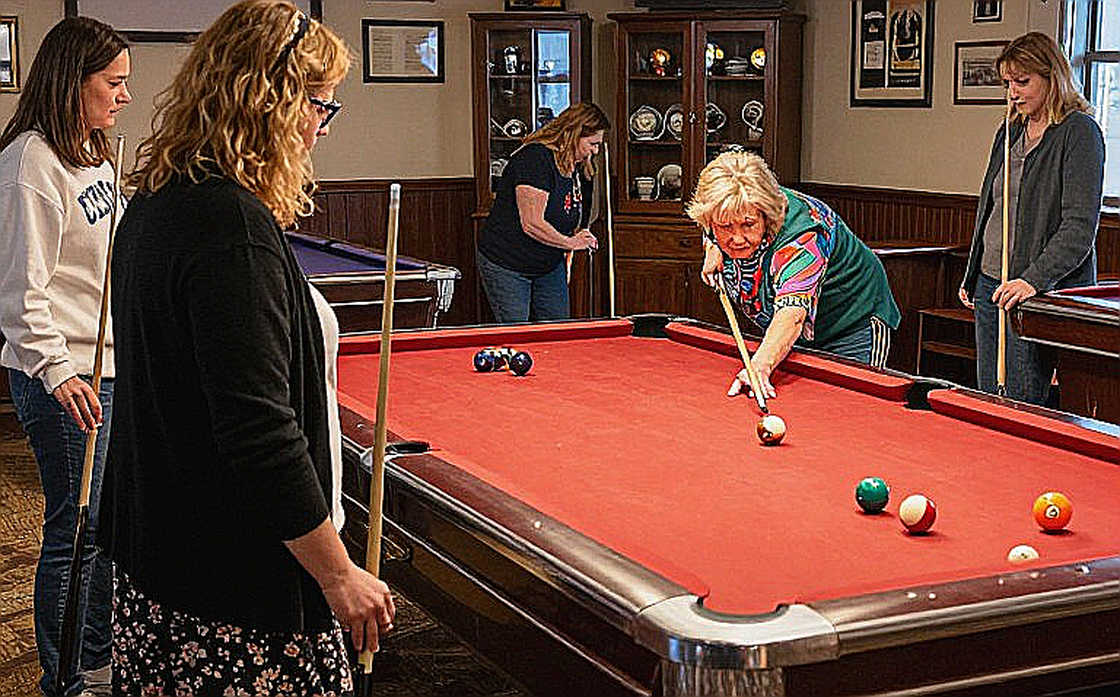
A round-of-16 finish in a field of nearly 200 players from 40 countries is an elite-tier result. But it must be placed at the right level: it is the threshold of a player good enough to survive the first half of a world championship, not yet the threshold of a title contender. Between those two levels lies a gap in the ability to close matches under pressure, something no statistical table captures.
One important detail is missed in most reports: last season's round-of-16 run came at home, and so does this one. The home-advantage variable is held constant across both cycles. That makes using the round of 16 as a baseline more rigorous — we are comparing two runs on the same track, with the same crowd conditions, the same time zone, the same familiar cloth.
A five-player home contingent is a signal in itself. A country sending one representative is a personal story. Five players entering a world championship together is a system story. It hints at host allocations, at a domestic qualifying structure, and at a billiards market large enough to sustain a cohort of internationally competitive players.
This is where I reopened my own spreadsheet. In 2026, when youth competitions froze, I built a tracking sheet for 47 young players from the PVF academy and the HAGL academy, logging height, appearances and minutes from the previous season. Four years later, a 19-year-old striker arrived on trial in Hai Phong, and I recognised him as the name with the torn cruciate ligament from that sheet. The board grew impatient, but I asked for three more weeks of data. Six months on, he failed the physical standard and was sent back. That procedure became the standard for every trial case afterwards.
I tell that story to make one point about Hoang: a player rising inside this event is not automatically a player ready for the title. Same type of data, same way of reading it.
Value chain: who pays for a week of pool in Saigon
Two side events carry brand names: the Poison Saigon Women's 9-Ball Open and the Box Billiards mixed-doubles open. Attaching an equipment maker's name to a tournament title is a direct commercial transmission channel: the brand puts its name on the board, viewers remember it, shops sell product, and the manufacturer has a reason to return next season. In billiards, where equipment directly shapes the playing experience, that channel is stronger than in many other sports.
Adding a women's event and a mixed-doubles event has its own logic. It broadens the audience base, pulls in a competitive segment that traditional men's pool majors leave empty, and turns a single week of competition into an extended billiards festival where prize money is spread across demographics.
The sediment of a championship lies not in the title, but in the players forgotten when the lights go out. The four Vietnamese names behind Hoang on the host list get little mention, yet they are the real indicator of a system's depth.
A city hosting a world championship two years running is an institutional confidence signal: organisational capacity, sponsor stability, and the absorptive capacity of the local market. A single staging can be an exhibition. Two consecutive stagings are a current.
One limit must be stated clearly. In pool, the traditional power centres are the United States, the Philippines, Chinese Taipei and parts of Europe. Vietnam sits in the ascending group, not the dominant one. But the source names no international rival at all, so I cannot build a power map from this data — and I refuse to build one from memory.
I found 47 gems not because I have a sharp eye, but because I am far too reluctant to trust the reports already written. That principle applies unchanged to a list of title contenders: a list with no international names is an incomplete list, not a list proving the rivals are absent.
The contrarian angle: the trap is in the word contender
Domestic reports call Hoang a heavyweight contender for the title. That is an opinion, not data. No world ranking for Hoang appears in the source. No international rival is named. When an article cannot name a single foreign contender, that is the mark of inward-facing journalism, not an analysis of the global field.
Doubt is not for denial; it is for digging deeper before announcing a find. I am not saying Hoang lacks the level. I am saying the claim has not been verified at the data layer, and readers should know where they stand between two zones: the zone of evidence and the zone of expectation.
One more issue goes largely unmentioned: home pressure is a two-way variable. A home crowd can lift a player, and it can also press him down. For a man carrying the national No. 1 tag, every visit in front of a hometown audience weighs more than a visit at an overseas open. Hoang said he prepared carefully and hopes to go further. That is a process-oriented statement rather than a results-oriented one — a positive indicator, but a weak one, because it is self-report rather than measurement.
Finally, the prize structure. The champion takes 80,000 USD out of a 500,000 USD total, roughly 16 percent. That ratio reflects a relatively flat payout curve compared with major championships in other sports, where the winner can take a far larger share. In pool, a flatter distribution has practical meaning: going deep for a few rounds already delivers real income, and competitive motivation is not concentrated entirely on one final match.

Progressive conclusion
A round-of-16 finish at a world championship on home soil is a real, measurable and repeatable result. A title is a hypothesis without data behind it. A sports writer can hold both thoughts at once without choosing a side: acknowledge the progress, and refuse to inflate it into something it is not yet.
The spreadsheet comes before the dream. I do not draw the future; I only measure the dust of time settling on each statistic. If Hoang passes the round of 16 this season, I will change my verdict. If he stops there, I will not call it failure. The only thing I will do is reopen the data sheet, add a line, and wait for the next cycle.